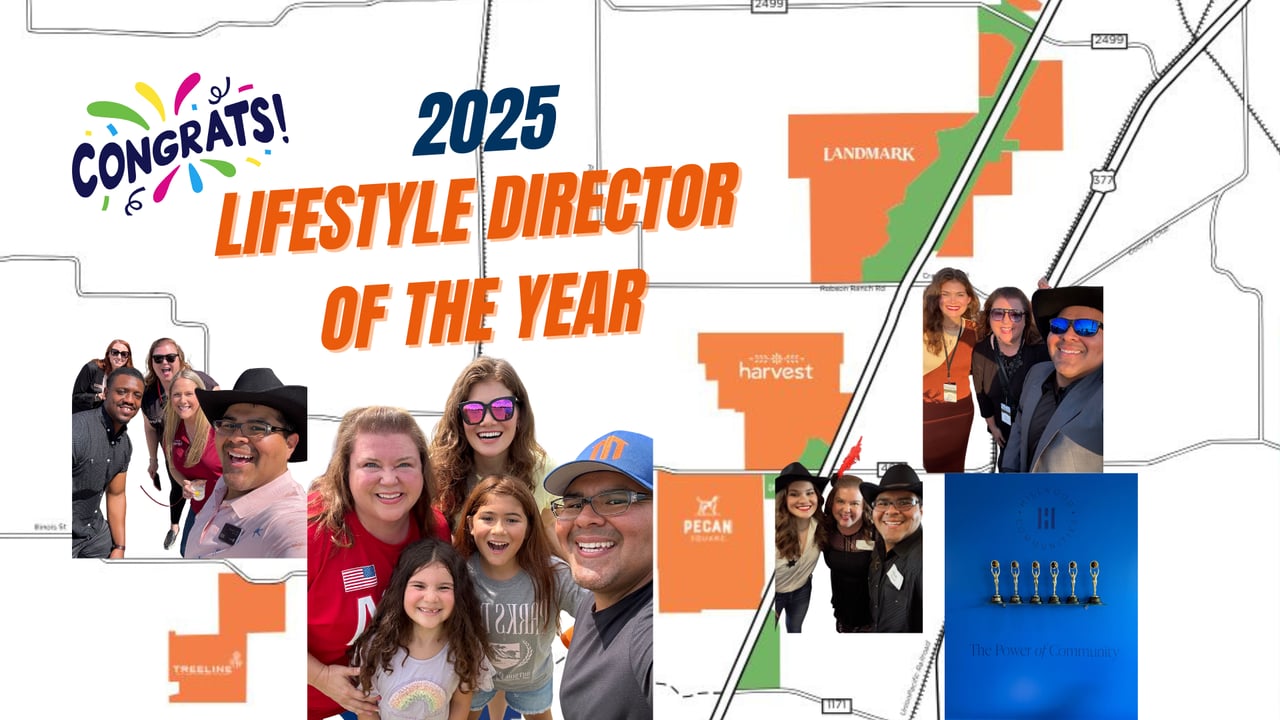
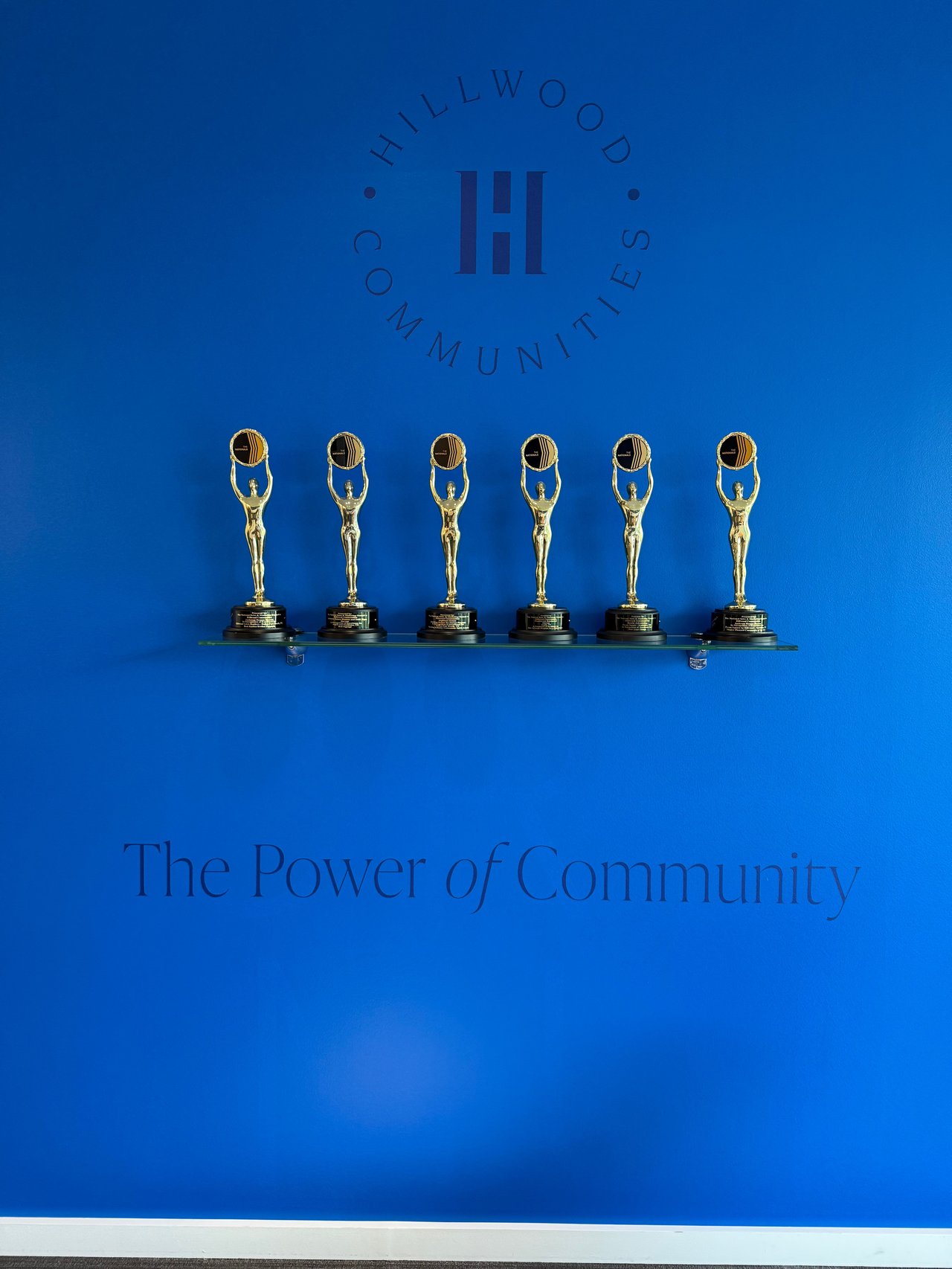
When Hillwood Communities won eight awards at the 2025 McSAM Awards—including their fourth consecutive Developer of the Year—three of those awards focused on a single element that most developers treat as an afterthought: lifestyle programming.
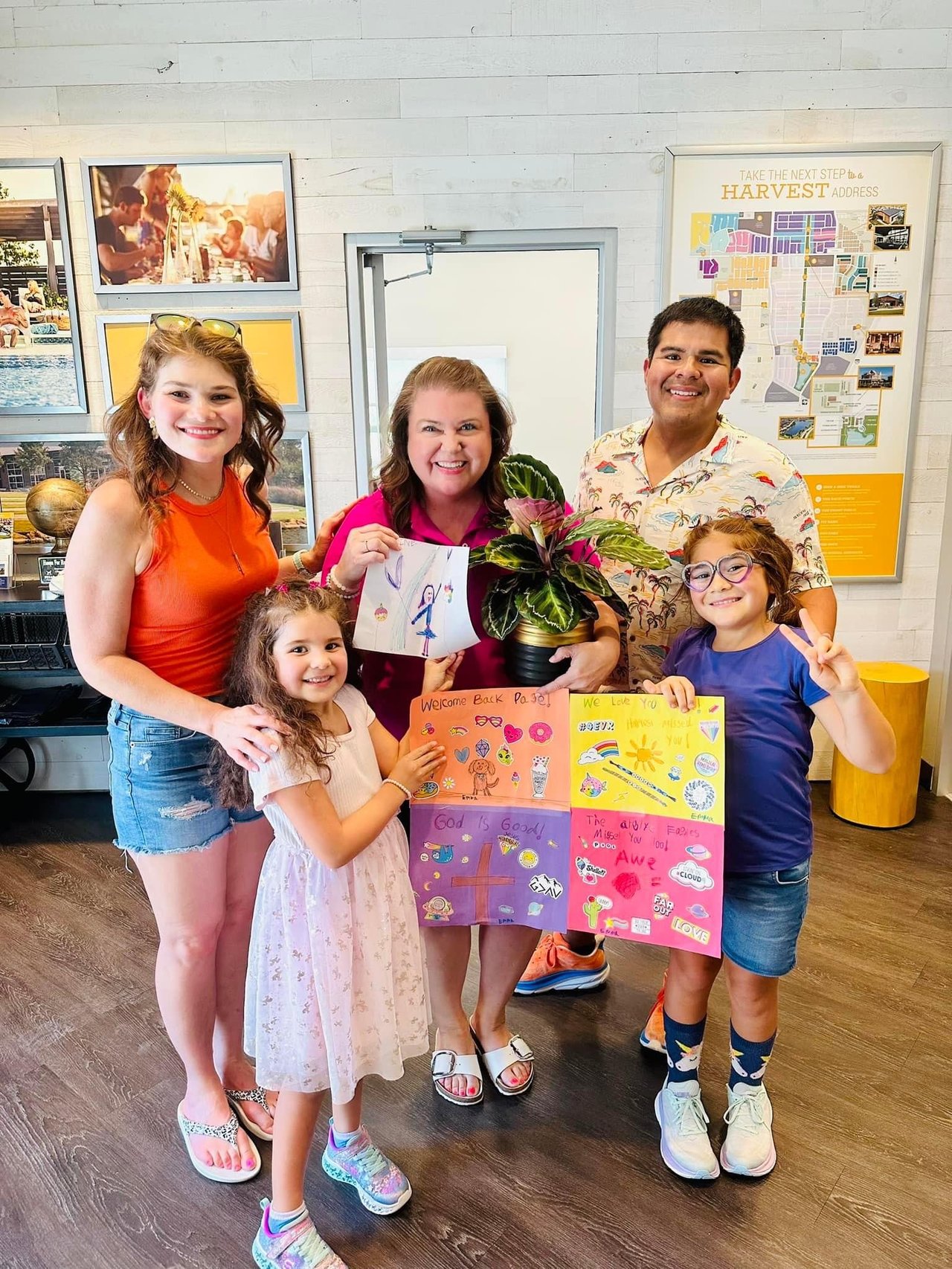
Page Austin, then Lifestyle Director at Harvest by Hillwood, won Lifestyle Director of the Year. Harvest's lifestyle program won best Lifestyle Program. The Harvest Farmhouse received special recognition as the heart of the community's programming. Following these achievements, Page has transitioned to lead lifestyle programming at Landmark by Hillwood as it opens in Spring 2026, while Katie Markham continues the award-winning program at Harvest.
This wasn't luck. This was validation of a decade-long commitment to fundamentally rethinking what it means to live in a master-planned community. Here's the inside story of how Hillwood's lifestyle program became the gold standard in DFW real estate—and why it matters for your home investment.
What Is a "Lifestyle Program" (And Why Should You Care)?
The Traditional Model: Build It and Hope They Come
Most master-planned communities follow a simple formula:
- Build homes
- Add a pool, clubhouse, and playground
- Hire a part-time activities coordinator
- Schedule 4-5 annual events (Easter egg hunt, July 4th party, Halloween trick-or-treat)
- Call it a "community"
The Result: Amenities sit mostly empty. Neighbors don't know each other. The community feels like a subdivision with a nice pool.
The Hillwood Model: Design for Connection
Hillwood's approach starts with a different question: "How do we design spaces and programs that create spontaneous interactions and authentic relationships between neighbors?"
The Result: Year-round programming with hundreds of events. A full-time lifestyle director who knows residents by name. Amenities buzzing with activity. Neighbors who actually become friends.
Why This Matters for Homebuyers
Industry research on master-planned communities suggests homes in communities with active lifestyle programs often sell for 3-7% premiums over comparable communities without active programming. They also typically sell 10-15% faster on average.
But the bigger impact is quality of life. When we ask Harvest buyers why they chose the community, "the lifestyle program" is consistently the #1 or #2 answer—ahead of schools, location, or home features.
Meet Page Austin: 2025 Lifestyle Director of the Year (Now at Landmark)
The Person Behind the Award
Page Austin built Harvest's award-winning lifestyle program and won Lifestyle Director of the Year in 2025 for that work. She came to Harvest with a clear vision: create a lifestyle program so comprehensive and authentic that it fundamentally changes how residents experience their community. After achieving that goal, she has transitioned to bring the same approach to Landmark by Hillwood as it opens in Spring 2026.
Her Approach Reflects:
- Years of experience in community programming and event management
- Deep understanding of what creates genuine connection vs. forced social interaction
- Passion for building authentic community culture
- Recognition that different residents need different types of programming
The Recognition: Winning Lifestyle Director of the Year at the 2025 McSAM Awards isn't just about throwing good parties. The Dallas Builders Association evaluates:
- Resident participation rates
- Diversity of programming
- Community engagement metrics
- Innovation in program design
- Long-term impact on community culture
Page won because Harvest's lifestyle program achieves all of these at the highest level.
What Made Page's Approach Different (And What Katie Continues)
Most lifestyle coordinators: Plan events, send emails, show up day-of, hope people attend.
Page's approach at Harvest (now continued by Katie Markham):
- Treats community building as a strategic, year-round initiative
- Creates programming tracks for different demographics (kids, adults, families, empty nesters, fitness enthusiasts, volunteers)
- Builds traditions that residents anticipate annually
- Empowers resident volunteers to co-create events
- Adapts programming based on feedback and participation data
- Makes newcomers feel welcomed within days, not months
The Philosophy: "Community doesn't happen by accident. You have to design spaces, create opportunities, and nurture connections. But once it takes root, it becomes self-sustaining."
Inside Harvest's Lifestyle Program: What It Actually Looks Like
The Numbers
Harvest's lifestyle program includes:
- Hundreds of annual events across all categories
- Extensive fitness programming (yoga, boot camp, Zumba, cycling, and more)
- Weekly social events (trivia nights, movie screenings, game nights)
- Seasonal celebrations (4th of July, Halloween, Christmas, Easter)
- Monthly family activities (pool parties, outdoor movie nights, food truck events)
- Volunteer opportunities (community service, beautification projects)
- Special interest groups (book club, running club, garden club)
- Kids programming (summer camps, art classes, sports leagues)
The Calendar: A Year at Harvest
The following represents typical programming throughout the year. Actual events vary annually based on resident feedback, community needs, and seasonal opportunities. Let's walk through what award-winning lifestyle programming delivers month-by-month.
JANUARY:
- New Year's fitness challenge kick-off
- Winter wellness series (nutrition workshops, fitness assessments)
- Indoor game nights (escaping cold weather)
- Super Bowl watch party planning
- New resident welcome events
FEBRUARY:
- Valentine's Day activities (family-friendly, not just couples)
- Heart health awareness fitness classes
- Winter farmers market featuring local vendors
- Resident appreciation events
- Book club discussions
MARCH:
- Spring garden workshop series (preparing for planting season)
- Easter egg hunt preparation and volunteer coordination
- Spring cleaning community beautification day
- Fitness challenge mid-point celebration
- St. Patrick's Day fun run
APRIL:
- Easter egg hunt (Harvest's largest annual event with 500+ participants)
- Spring festival with local vendors, food trucks, live music
- Earth Day garden planting at community farm
- Outdoor movie nights resume (weather permitting)
- Tennis and pickleball tournament
MAY:
- Memorial Day pool opening celebration
- Mother's Day brunch or tea
- Spring concert series begins
- Kids' summer camp registration
- Resident talent show
JUNE:
- Summer kick-off party at the pool
- Father's Day activities
- Kids' summer camp Week 1
- Food truck Friday events begin (weekly through September)
- Outdoor yoga in the park
JULY:
- 4th of July celebration (fireworks, parade, BBQ competition)
- Kids' summer camp Weeks 2-3
- Christmas in July planning (yes, really—residents love it)
- Pool parties every weekend
- Fitness boot camp challenge
AUGUST:
- Back-to-school bash
- Teacher appreciation event
- Summer camp final week
- Pool Olympics for kids
- Heat relief: indoor activities increase
SEPTEMBER:
- Fall festival planning
- Labor Day weekend celebration
- New fitness class session begins
- Harvest at Night: outdoor movie series
- Welcome back social for families
OCTOBER:
- Harvest Fall Festival (farm-themed activities, pumpkin patch, hayrides)
- Halloween events (trunk-or-treat, costume contest, haunted trail)
- Oktoberfest celebration
- Community 5K run/walk
- Thanksgiving food drive begins
NOVEMBER:
- Thanksgiving prep workshops (cooking classes, table setting ideas)
- Turkey trot fun run
- Holiday decor contest announced
- Christmas tree lighting ceremony
- Gratitude campaign (residents share what they're thankful for)
DECEMBER:
- Christmas tree lighting and Santa visit
- Holiday home tour (residents showcase decorated homes)
- New Year's Eve family celebration (ends at 9 PM for families)
- Holiday craft workshops
- Year-end fitness challenge finale
The Spaces: Where Community Happens
The Harvest Farmhouse:
- Central gathering space designed for multiple uses
- Indoor/outdoor flow for year-round programming
- Commercial kitchen for cooking classes and events
- Flexible spaces that convert from fitness studio to meeting room to party venue
- Connection to on-site farm and orchard (unique to Harvest's agrihood concept)
The Event Lawn:
- Open lawn for concerts, festivals, movie nights
- Amphitheater seating
- Covered pavilions with power for vendors/DJ equipment
- Walking distance from most homes
The Pools:
- Resort-style main pool with multiple zones
- Splash pad for young children
- Lap lanes for fitness swimmers
- Shade structures and cabanas for events
- Pool house with changing facilities and gathering space
The Fitness Areas:
- Indoor fitness center with cardio and strength equipment
- Outdoor fitness stations along trails
- Yoga lawn
- Sports courts (tennis, pickleball, basketball)
The Farm & Orchard:
- Educational programming about sustainable agriculture
- Seasonal harvests open to residents
- Farm-to-table events featuring produce from community land
- Volunteer opportunities for garden enthusiasts
The Trails:
- 15+ miles of walking/running trails
- Connected to amenity spaces
- Designed to encourage spontaneous neighbor interactions
- Dog-friendly for the many Harvest pet owners
The Secret Sauce: How Page Makes It Work
1. Know Your Residents
Page doesn't just plan events—she knows who will attend them. She tracks:
- Demographics (young families, empty nesters, retirees)
- Interests (fitness enthusiasts, foodies, crafters, volunteers)
- Participation patterns (regular attendees vs. occasional joiners)
- Feedback (what worked, what didn't, what people want)
This allows targeted programming: When you know 50 families have kids under 5, you create toddler-specific programming. When you know 30 residents are fitness enthusiasts, you offer advanced classes.
2. Build Traditions
First-time events are hard to fill. Annual traditions become must-attend.
Harvest's established traditions:
- Easter egg hunt (500+ attendees)
- 4th of July celebration with fireworks
- Fall Festival at the farm
- Christmas tree lighting
- Halloween trunk-or-treat
- Summer movie nights
Residents plan their calendars around these. Missing them feels like missing Thanksgiving dinner.
3. Create Volunteer Leaders
Page doesn't do everything herself. She identifies resident leaders and empowers them to co-create programming.
Examples:
- Fitness instructors who are also residents lead classes
- Garden club members organize planting days
- Book club self-organizes with Page's support
- Running club coordinates their own routes and meetups
The impact: Residents feel ownership. Programs become community-driven, not top-down.
4. Make Newcomers Feel Welcome Immediately
New residents receive:
- Welcome packet with lifestyle calendar
- Personal introduction to Page
- Quick-start guide to getting involved
The goal: Within two weeks, new residents have attended at least one event and met multiple neighbors.
5. Adapt and Evolve
Page runs resident surveys annually asking:
- What events did you attend?
- What would you like to see more of?
- What times work best for your schedule?
- What prevents you from attending events?
The result: Programming evolves. When feedback showed interest in outdoor fitness, Page added trail running clubs and outdoor boot camps. When residents requested more adult-only events, she added wine tastings and game nights.
6. Communicate Relentlessly
Residents receive:
- Monthly lifestyle newsletter
- Weekly email highlights
- Social media updates (Harvest Facebook group)
- Printed calendar posted at amenities
- Text alerts for last-minute events or changes
The philosophy: Over-communicate. Residents can ignore what doesn't interest them, but they can't attend events they don't know about.
The Harvest Farmhouse: Special Recognition Explained
The Harvest Farmhouse won special recognition at the 2025 McSAM Awards—not just for its design, but for how it functions as the heart of Harvest's lifestyle programming.
What Makes It Special
Most community clubhouses: Generic spaces that could be anywhere. Designed by architects who've never attended a community event.
The Harvest Farmhouse: Thoughtfully designed specifically to enable the lifestyle program. Every detail serves community building. Award-winning amenities like the Harvest Farmhouse typically include features such as:
Design Elements That Enable Programming:
Flexible Spaces:
- Main hall converts from fitness studio (morning yoga) to party venue (evening celebration) to meeting space (afternoon workshop)
- Furniture on wheels allows quick room transformation
- Multiple breakout rooms for simultaneous programming
Indoor/Outdoor Flow:
- Large doors open to connect indoor spaces to outdoor patios
- Covered transition areas for year-round use
- Outdoor kitchen and bar for catering events
- Fire pits and lounge seating for informal gatherings
Commercial Kitchen:
- Not just a warming kitchen—full commercial capabilities
- Enables cooking classes, food prep for large events, catering
- Residents can rent for private parties
- Farm-to-table dinners using produce from on-site farm
Agrihood Connection:
- Visual and physical connection to Harvest's farm and orchard
- Reinforces community's agricultural heritage theme
- Educational programming about sustainable farming
- Seasonal harvest celebrations
Technology Integration:
- AV equipment for movie nights and presentations
- Sound system for music events
- Wi-Fi throughout for modern connectivity
- Lighting that adapts from yoga ambiance to party atmosphere
Comfort & Accessibility:
- Climate-controlled year-round
- Accessible design for all ages and abilities
- Ample parking nearby
- Restrooms designed for event capacity
Why This Earned Special Recognition
The McSAM Awards committee evaluates amenities on:
- Design quality and attention to detail
- Functionality for intended use
- Integration with community character
- Impact on resident experience
- Innovation and uniqueness
The Harvest Farmhouse excels at all five. It's not just a beautiful building—it's a machine for creating community.
The measurable impact:
- 80%+ of Harvest residents have attended at least one event at the Farmhouse
- Average of 15-20 events per month held in the space
- High resident satisfaction scores specifically citing the Farmhouse
- Distinctive character that reinforces Harvest's agrihood identity
Why Lifestyle Programs Drive Home Values
Let's talk about what lifestyle programs actually mean for your investment.
Higher Appreciation Rates
Industry analysis of master-planned communities suggests that communities with active lifestyle programs typically see 2-4% faster appreciation than comparable communities without active programming.
Why this happens:
1. Higher Resident Retention
- Research on engaged communities suggests 20-30% higher retention rates
- Fewer distressed sales that pull down comps
- More stable market = steadier appreciation
2. Stronger Buyer Demand
- Buyers specifically search for communities with lifestyle programs
- Premium positioning vs. standard subdivisions
- Smaller buyer pool = less competition for sellers
3. Better Maintained Community
- Engaged residents volunteer for HOA boards
- Higher pride of ownership
- Well-maintained common areas
- Property values protected long-term
Faster Sales Velocity
Industry observations suggest homes in communities with strong lifestyle programs sell 10-15% faster on average.
Why:
1. Differentiation
- Generic subdivision: "Here's a house"
- Hillwood community: "Here's a lifestyle"
- Easier to market, easier to sell
2. Emotional Connection
- Buyers don't just see the house—they experience the community
- Tour during an event = instant visualization of lifestyle
- Emotional buying decisions happen faster
3. Less Negotiation
- Premium product = less price sensitivity
- Fewer days on market = less price reduction pressure
Long-Term Value Protection
What happens in 10-15 years?
Communities without lifestyle programs:
- Amenities show wear and tear
- No culture of maintenance or engagement
- Deferred maintenance becomes visible
- Community feels tired and dated
Communities with lifestyle programs:
- Engaged residents maintain pride of ownership
- HOA boards actively invested in community success
- Amenities continually refreshed and updated
- Community culture self-perpetuates
The result: Hillwood communities age better than competitors. The value gap widens over time, not narrows.
What Other Developers Get Wrong (And Why Hillwood's Model Is Hard to Copy)
The Common Mistakes
Mistake #1: Part-Time Lifestyle Coordinator
What they do: Hire someone 20 hours/week to "coordinate activities"
Why it fails:
- Can't build relationships with residents part-time
- No bandwidth for comprehensive programming
- Reactive instead of strategic
- High turnover (it's a side job, not a career)
Hillwood's approach: Full-time lifestyle director with support staff. Page isn't just coordinating—she's building a culture.
Mistake #2: Cookie-Cutter Programming
What they do: Run the same 5 events every year because "that's what people expect"
Why it fails:
- Residents get bored
- Doesn't adapt to community demographics
- No differentiation from other communities
- Participation drops over time
Hillwood's approach: Hundreds of diverse annual events adapted to resident feedback. No two years are identical.
Mistake #3: Amenities First, Programming Second
What they do: Build impressive clubhouse, then figure out programming
Why it fails:
- Spaces don't function well for actual use
- Beautiful but impractical
- Programming feels like an afterthought
- Underutilized amenities
Hillwood's approach: Design amenities specifically to enable programming. The Harvest Farmhouse's design came from understanding what Page needed to run the program.
Mistake #4: No Budget for Programming
What they do: Build amenities, hire coordinator, provide $10K/year programming budget
Why it fails:
- Can't run quality events on no budget
- Residents notice cheap execution
- Limits what's possible
- Coordinator gets frustrated and quits
Hillwood's approach: Meaningful investment in programming budget. Quality events require resources. Hillwood treats this as strategic investment, not expense.
Mistake #5: No Measurement or Adaptation
What they do: Schedule events, hope people show up, never analyze results
Why it fails:
- Don't know what works or why
- Can't improve over time
- Miss opportunities to increase engagement
- Flying blind
Hillwood's approach: Track participation, survey residents, adapt programming. Data-driven continuous improvement.
Why Hillwood's Model Is Hard to Copy
1. Requires Long-Term Commitment
Building community culture takes 3-5 years. Most developers want results in Year 1. Hillwood plays the long game.
2. Requires Investment
Full-time lifestyle director + support staff + programming budget = significant annual expense. Most developers see this as cost. Hillwood sees it as competitive advantage.
3. Requires Expertise
You can't just hire anyone and get Page Austin-level results. This requires specific skills, experience, and passion. Talent is rare.
4. Requires Integration
Hillwood's lifestyle program works because it's integrated with community design, amenity planning, and marketing from day one. You can't bolt it on after the fact.
5. Requires Culture
This starts with Fred Balda (President of Hillwood Communities) and flows through the organization. Everyone understands lifestyle programming is core to the product, not a nice-to-have.
The result: Competitors see what Hillwood does and can't replicate it. The model looks simple but requires infrastructure, investment, and culture that takes years to build.
Comparing Harvest to Competitors: Real-World Differences
Let's compare Harvest's lifestyle program to three nearby communities. The following comparisons represent composite examples based on market observations of communities in the Alliance corridor. Specific metrics are estimates based on typical market performance patterns.
Community A: Traditional Subdivision
Location: 3 miles from Harvest
Price Point: Similar ($500s-$700s)
Age: 5 years old
Lifestyle Programming:
- Part-time activities coordinator (20 hours/week)
- 8-10 annual events (Easter, 4th of July, Halloween, Christmas)
- Small fitness center (mostly empty)
- Pool (busy in summer, dead rest of year)
- Facebook group with 300 members (out of 800 homes)
What Residents Say: "Nice neighborhood, good location, but doesn't feel like much of a community. We barely know our neighbors."
Community B: "Luxury" Master-Planned Community
Location: 8 miles from Harvest
Price Point: Slightly higher ($600s-$800s)
Age: 7 years old
Lifestyle Programming:
- Full-time lifestyle coordinator
- 20-25 annual events
- Nice clubhouse and resort-style pool
- Some fitness classes
- Facebook group with decent engagement
What Residents Say: "Better than most communities, but events feel generic. Nothing special that makes this community unique."
Community C: Lifestyle-Focused Competitor
Location: 12 miles from Harvest
Price Point: Similar ($500s-$700s)
Age: 3 years old
Lifestyle Programming:
- Full-time lifestyle director
- 50+ annual events
- Good amenities and programming
- Active resident engagement
- Trying to compete with Hillwood model
What Residents Say: "Great community with lots to do. We love the lifestyle program."
Note: This is the closest competitor, and they're doing well! But they're 3 years into building culture vs. Harvest's 12 years. Time and consistency matter.
Harvest by Hillwood
Location: I-35W & FM 407, Argyle
Price Point: $390s-$800s+
Age: 12 years (celebrated 12th anniversary October 2025)
Lifestyle Programming:
- Award-winning full-time lifestyle director (Page Austin)
- Hundreds of annual events across all categories
- Comprehensive amenities designed for programming
- Multiple demographic tracks
- Harvest Farmhouse (special recognition)
- Deep resident engagement and volunteer culture
What Residents Say: "The lifestyle program is why we bought here. Our kids have friends in every neighborhood. We know more people here in 2 years than we knew in our last neighborhood in 10 years."
The Data Tells the Story
Based on market observations of Alliance corridor communities:
| Metric | Community A | Community B | Community C | Harvest |
|---|---|---|---|---|
| Annual Events | 8-10 | 20-25 | 50+ | Hundreds |
| Lifestyle Staff | Part-time | Full-time | Full-time | Award-Winning Full-time |
| Market Performance | Slower | Moderate | Good | Strong |
| Resident Retention | Lower | Moderate | Good | High |
| Pricing Position | Below Market | Competitive | Competitive | Premium |
The pattern is clear: More comprehensive lifestyle programming correlates with stronger market performance, higher retention, and premium positioning.
Note: Specific metrics are representative examples based on typical market performance patterns in the Alliance corridor.
What This Means for Buyers Considering Hillwood Communities
If You're Buying New Construction in Harvest
You're getting:
- Proven lifestyle program with 12 years of refinement
- Award-winning leadership (Page Austin, Lifestyle Director of the Year)
- Established community culture (not starting from scratch)
- Amenities designed specifically to enable programming
- Hundreds of annual events already on the calendar
- Instant access to engaged neighbor network
The investment angle:
- Buy into established premium positioning
- Low turnover = stable market
- Community culture already thriving (not speculative)
- Lifestyle program only gets better as community matures
The lifestyle angle:
- Immediate community integration
- Kids make friends quickly
- Adults find their people (fitness enthusiasts, foodies, volunteers, etc.)
- Never bored on weekends
If You're Buying Resale in Harvest
You're getting:
- Same lifestyle program access as new construction buyers
- Mature landscaping and established feel
- Proven neighbor network
- Often better value per square foot than new construction
- No wait time for amenities to be completed
The investment angle:
- Buy below replacement cost in many cases
- Lifestyle program premium already reflected in pricing
- Community has proven staying power
- Low risk of community culture failing to develop (it already has)
The lifestyle angle:
- Plug into existing neighbor groups immediately
- Established traditions and events
- Page knows the community intimately
- Can talk to current owners about their experience
If You're Considering Pecan Square, Landmark, Treeline, or Ramble
Each Hillwood community gets a lifestyle director and programming adapted to that community's character:
Pecan Square (Northlake):
- Town square concept with Jackson Hall as centerpiece
- The Greeting House (co-working space + coffee bar)
- Programming emphasizes nostalgia, community gathering, town square events
- Established program with high resident engagement
Landmark (Denton):
- Opening Spring 2026 with lifestyle program from day one
- Programming will emphasize nature (1,100 acres preserved), outdoor activities
- Pilot Knob as unique focal point
- Page's model adapted to Landmark's "city within a city" concept
Treeline (Justin):
- Nature-forward community with mature trees and winding creek
- Programming emphasizes outdoor activities, environmental stewardship
- Won "Best Use of Technology" for AR amenity previews
- Lifestyle program integrated with nature theme
Ramble (Celina):
- Opening Spring 2026 as "community in the park"
- Four-mile greenbelt woven through community
- Programming will emphasize outdoor activities, park utilization
- Lifestyle director will build on Hillwood's proven model with comprehensive year-round events
What they all share:
- Full-time lifestyle director from day one
- Hillwood's proven programming model
- Amenities designed to enable programming
- Investment in community culture, not just infrastructure
What If You're Not a "Joiner"?
Common concern: "I'm not into organized activities. Why should I care about lifestyle programming?"
Here's why it matters even if you never attend an event:
1. Property Values Even non-participants benefit from premium pricing and faster sales velocity.
2. Well-Maintained Community Engaged residents = better HOA governance = well-maintained common areas that protect your investment.
3. Neighbor Quality People who value community tend to be good neighbors. Lower turnover = stability.
4. Optionality You might not be interested today, but life changes. Kids want to participate. You discover pickleball. You meet neighbors who become friends. The option is there when you want it.
5. Resale Appeal Even if you don't use the program, your future buyer probably will. Lifestyle programming makes your home easier to sell.
The reality: Only 30-40% of residents actively participate in lifestyle programming regularly. But 100% benefit from it existing.
Frequently Asked Questions
Is the lifestyle program included in HOA fees or does it cost extra?
Included in HOA fees. All residents have access to all programming at no additional cost beyond their standard HOA dues.
Exceptions: Some specialty programs might have material costs (e.g., art classes with supplies, cooking classes with ingredients). These are typically $5-20 per person and optional.
What if I work crazy hours and can't attend events?
The beauty of comprehensive year-round programming is there's always something at different times:
- Early morning fitness classes (6 AM yoga)
- Lunch-hour activities (for work-from-home residents)
- Evening events (after work)
- Weekend programming (family-friendly)
- Drop-in activities (use amenities anytime)
That said, even if you never attend, you still benefit from the community culture and property value impacts.
Do I have to RSVP or can I just show up?
Depends on the event:
- Large community events: Just show up
- Fitness classes: Drop-in welcome
- Catered events with food: RSVP required (for headcount)
- Workshops with limited space: Registration required
Page makes it easy—most events are drop-in friendly.
Is there programming for different age groups?
Yes! Page designs programming tracks for:
- Toddlers & preschoolers: Tot time, playgroups, story time
- Elementary kids: Summer camps, sports leagues, art classes
- Teens: Teen nights, volunteer opportunities, sports
- Adults: Fitness classes, book club, trivia nights, wine tastings
- Families: Movie nights, pool parties, seasonal celebrations
- Empty nesters/retirees: Morning coffee groups, hiking club, daytime activities
The goal is programming for every stage of life.
What about residents who work from home?
The Greeting House at Pecan Square specifically addresses this with co-working space. Harvest residents often use the Farmhouse during off-peak hours for remote work.
Programming includes:
- Lunch-hour fitness classes
- Coffee shop-style meet-ups
- Networking events for entrepreneurs
- Quiet spaces for focus work
Work-from-home residents are a growing demographic, and Hillwood programs accordingly.
Can I volunteer to help with events?
Absolutely! Page actively recruits resident volunteers. This is part of what makes the program sustainable—residents co-create the community.
Volunteer opportunities:
- Day-of event support
- Teaching fitness classes (if certified)
- Leading interest groups (running club, book club, garden club)
- One-time help (setting up, greeting, cleanup)
Many residents find their closest friendships through volunteering together.
What happens if Page leaves? Will the program continue?
Update: Page Austin is transitioning to lead lifestyle programming at Landmark by Hillwood as it opens in Spring 2026. Katie Markham has been promoted to Lifestyle Manager at Harvest.
Why this is positive news:
Katie comes to Harvest with strong qualifications. In April 2025, she joined the Harvest team as Assistant Lifestyle Manager—a full-circle moment, as she wrote a high school paper about Harvest's lifestyle concept 10 years ago. She's a Texas A&M graduate with a degree in Recreation, Park & Tourism Sciences, bringing both passion for the community and professional training. Her promotion to Lifestyle Manager demonstrates Hillwood's commitment to developing talent from within.
Hillwood's approach to continuity:
- Lifestyle programming is a company-wide commitment, not dependent on one person
- Multiple communities with lifestyle directors sharing best practices
- Documented processes and programming calendars
- Budget commitment continues regardless of staff changes
- Page's model at Harvest will continue under Katie's leadership
- Page will apply the same award-winning approach at Landmark
The bigger picture: Page's move to Landmark demonstrates Hillwood's commitment to lifestyle programming across all communities. The company invests in developing talent and promoting from within, ensuring the culture and standards continue.
How does the lifestyle program compare to country club memberships?
Key differences:
Country Club:
- Separate membership fees ($5K-$30K initiation + $500-$1,500/month)
- Golf-centric programming
- Formal atmosphere
- Drive to separate location
- Demographic skews older and wealthier
Hillwood Lifestyle Program:
- Included in HOA fees
- Diverse programming (fitness, social, family, volunteer)
- Casual, neighborhood-friendly atmosphere
- Walk from your home
- Demographic includes all ages and income levels within community
They're not competing products. Some Harvest residents have country club memberships AND participate in lifestyle programming. The Hillwood program is neighborhood-focused community building, not luxury recreation.
Can my parents/guests attend events when visiting?
Yes, with some guidelines:
- Family guests (parents, siblings visiting): Welcome at most events
- Fitness classes: Usually resident-only (capacity limits)
What if I want to host a private event at the Farmhouse?
Residents can rent the Harvest Farmhouse for private events (birthdays, graduations, etc.). There's a rental fee and booking process.
This is separate from community-wide programming.
Does the lifestyle program continue year-round or just during summer?
Year-round programming. Events adapt to seasons:
- Summer: Pool-focused, outdoor activities peak
- Fall: Harvest festivals, outdoor events in perfect weather
- Winter: Indoor programming increases, holiday celebrations
- Spring: Garden activities, outdoor events resume
The calendar never goes dark. There are events every month of the year.
How do I stay informed about events?
Multiple channels:
- Monthly lifestyle newsletter (email)
- Weekly event highlights (email)
- Harvest Facebook group (social media)
You won't miss events unless you choose to.
About Miranda Realty Team
Paige and Edson Miranda are Alliance corridor specialists serving buyers and sellers in Argyle, Northlake, Denton, Justin, and surrounding I-35W communities. With extensive experience in Hillwood master-planned communities including Harvest, Pecan Square, Treeline, and Landmark, they provide:
- Spirit-led counsel and straight talk, with no fluff
- Expert knowledge of Hillwood lifestyle programs and community culture
- New construction and resale market expertise
- First-time buyer and out-of-state relocation support
- Investment property analysis and strategy
- Pricing expertise in the $300K-$1.5M range
The Alliance Connection
Beyond real estate services, Edson co-founded Alliance Network, a hyper-local news and market intelligence platform providing comprehensive coverage of the Alliance Texas corridor. Through Alliance Network, the Miranda team delivers in-depth analysis of new developments, retail announcements, infrastructure projects, and market trends that directly impact property values in Harvest, Pecan Square, Landmark, and surrounding communities. This unique combination of real estate expertise and local journalism ensures clients receive not just transactional support, but true market intelligence for informed decision-making.
Contact Miranda Realty Team:
📞 940.577.2051
📧 [email protected]
🌐 https://mirandarealty.team/
Landmark by Hillwood Specialist Inquiries:
📧 [email protected]
Alliance Network (Monthly Newsletter - Local Market Intelligence):
🔗 https://beacons.ai/alliancenetworktx
Related Articles
- Hillwood Wins 4th Consecutive Developer of the Year (2025)
- Baylor Scott & White Coming to Argyle in 2027: Complete Guide to Heritage Development
- Harvest by Hillwood Complete Neighborhood Guide
- Pecan Square by Hillwood: Complete Neighborhood Guide
- Landmark by Hillwood: Everything You Need to Know Before Phase 1 Opens