Last Updated: September 24, 2026
Why New Construction Matters More Than Ever in 2026
If you're reading this guide, you're likely considering one of the most significant decisions in real estate: buying a brand-new home. And you've picked an exceptional time to do it.
The 2026 new construction market in North Texas presents opportunities we haven't seen in five years. Builders are offering incentives at levels not experienced since 2020-2021, inventory homes are sitting longer, and buyers have negotiating power that seemed impossible just 18 months ago.
But new construction comes with its own playbook—one that's fundamentally different from buying a resale home. Builder contracts favor the builder. Design center appointments can be overwhelming. Lot selection involves considerations most buyers have never thought about. And master-planned communities offer amenities and lifestyle programming that can transform how you live, but require understanding what you're really paying for.
This guide walks you through every stage of the new construction journey, from understanding builder business models to closing day and beyond. We'll cover what to negotiate, what to upgrade at the design center, how to select the perfect lot, and why master-planned communities like those developed by Hillwood Communities represent some of the most compelling value propositions in North Texas real estate.
This is straight talk, no fluff—just the information you need to make confident decisions.
Let's get started.
Verified Credentials
- North Fort Worth Real Producers, 2026: Edson Miranda ranked Top 250 and Paige Miranda ranked Top 1,000, out of approximately 15,000 agents in the North Fort Worth market.
- RealTrends Verified, 2026: Miranda Realty Team named a Best Real Estate Small Team in Argyle, Texas, based on independently verified 2025 production.
- Team production: Over 50 homes sold and more than $23 million in Texas real estate closed over the last two years.
- Service area: Denton, Argyle, Northlake, Justin, Flower Mound, Fort Worth, and the greater DFW metroplex
Part 1: Understanding the New Construction Landscape in 2026
The Current Market Reality
The North Texas new construction market has shifted dramatically since the 2021-2022 peak. During that period, builders held all the cards: homes sold from blueprints, buyers waived contingencies, and bidding wars were common even for homes that wouldn't be ready for 8-12 months.
2026 looks nothing like that environment.
Today's market characteristics include:
Builder incentives are back. Many builders are offering $20,000-$50,000 in incentives, including rate buydowns, closing cost assistance, and design center credits. Some builders are providing 2-1 or even 3-2-1 temporary rate buydowns, giving buyers significantly lower payments in the first years of homeownership.
Inventory homes are available. Spec homes and quick move-in inventory that would have sold within days in 2022 are now sitting for 30-60 days or longer. This creates negotiating opportunities and eliminates lengthy build timelines for buyers who need to move quickly.
Builders are motivated. Public builders answer to shareholders and have quarterly targets to hit. Private builders have carrying costs on land and construction loans. Both types are more willing to negotiate than they've been in years.
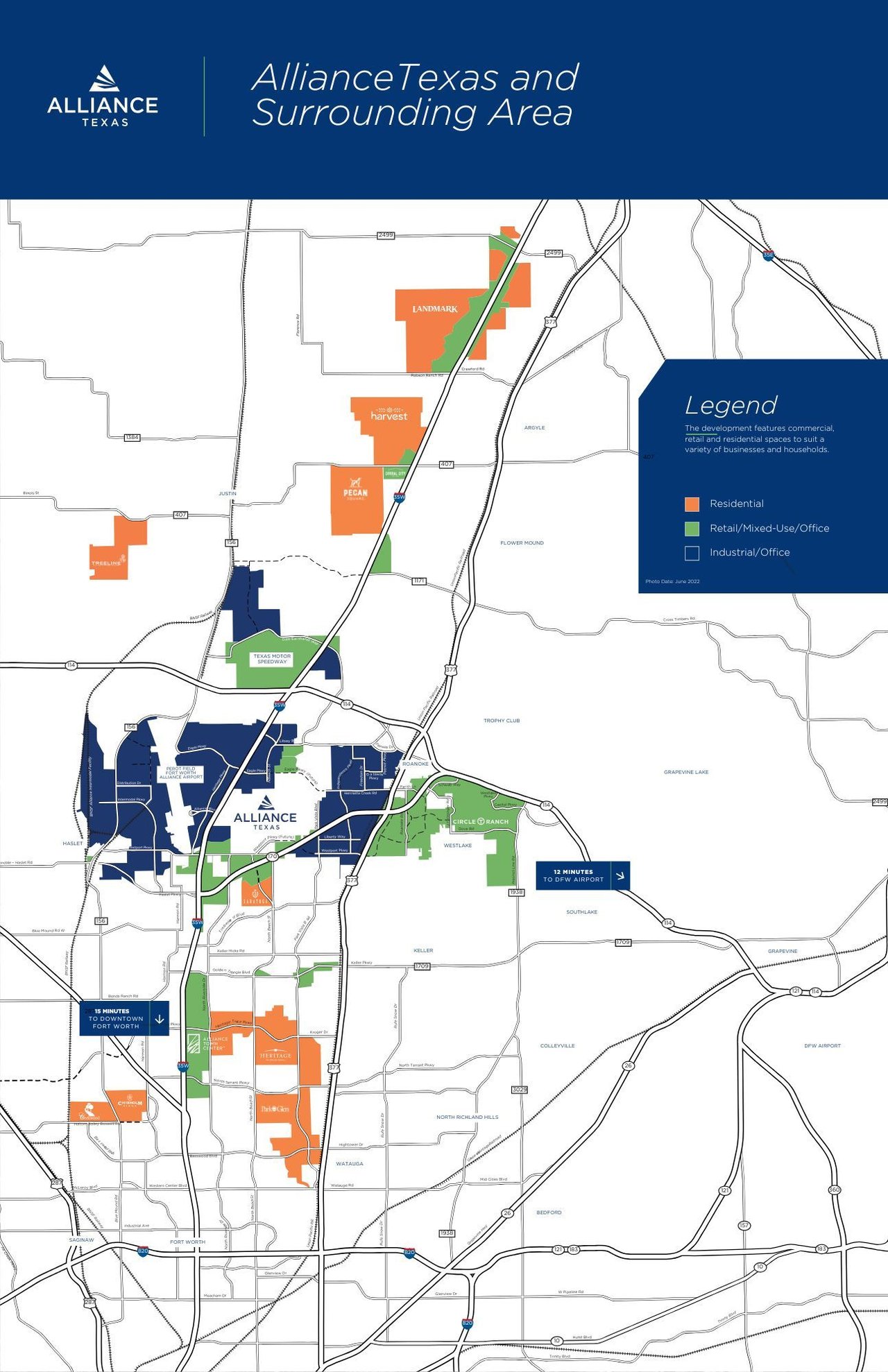
Master-planned communities are maturing. Established communities like Harvest, Pecan Square, and Treeline now have multiple builders, extensive amenities, and proven lifestyle programming. Newer communities like Landmark are launching with compelling value propositions based on lessons learned from earlier developments.
This environment favors informed buyers who understand builder economics, contract terms, and how to leverage current market conditions.
Why Buyers Choose New Construction
Despite typically higher price points compared to resale homes, new construction attracts buyers for several compelling reasons:
Everything is new. You're the first owner of every system, appliance, and component. Nothing is worn out or improperly maintained by previous owners.
Modern efficiency. Today's new homes are built to current energy codes, with better insulation, more efficient HVAC systems, LED lighting, and Low-E windows. Monthly utility costs in a 2026-built home typically run 30-40% lower than a comparable home built in 2010.
Current design trends. Open floor plans, larger primary suites, mudrooms, tech spaces, and outdoor living areas come standard in most new construction. You're not paying to renovate a home to get the features you want.
Warranty coverage. Texas HB 2024 mandates minimum warranty coverage: one year for workmanship defects, two years for mechanical and electrical systems, and six years for major structural components. Some builders exceed these minimums.
Customization options. When buying pre-construction, you can often select your lot, elevation, and make numerous design decisions. Even inventory homes may offer some customization opportunities.
Master-planned community amenities. Many new construction neighborhoods include resort-style pools, fitness centers, parks, trails, and lifestyle programming that would cost thousands annually at private clubs.
Predictable costs. You know exactly what you're getting, what it costs, and when it will be ready. There are no surprise repair needs lurking behind walls.
Understanding Builder Business Models
Not all builders operate the same way, and understanding their business model helps you negotiate more effectively.
Public Builders (like D.R. Horton, Lennar, KB Home, Pulte)
- Answer to shareholders with quarterly earnings targets
- Often offer their own mortgage companies with additional incentives for using preferred lenders
- May have more flexibility on incentives, especially near quarter-end
- Typically build in higher volumes with more standardized processes
- Often include more base features to simplify choices
Private Builders (like Highland Homes, David Weekley, Drees Custom Homes)
- Answer to ownership, not public shareholders
- May focus more on customization and buyer experience
- Often have more design flexibility
- May be less motivated by quarterly targets but still have carrying costs
- Sometimes offer more attentive construction oversight and customer service
Production Builders vs. Semi-Custom Builders
Production builders construct homes from a set of predetermined plans with defined option packages. This approach keeps costs lower and timelines more predictable. Think of it like ordering from a restaurant menu—you can customize within defined parameters, but you're not creating something entirely unique.
Semi-custom builders offer more flexibility in floor plan modifications, structural changes, and finish selections. This approach costs more and takes longer but delivers a more personalized result.
Understanding which type of builder you're working with sets appropriate expectations for the process.
Part 2: The New Construction Buying Process
Finding the Right Community and Builder
Your new construction journey typically begins with location and community selection rather than individual home selection.
Step 1: Define Your Location Priorities
North Texas offers new construction in virtually every direction from the Metroplex core, each with distinct characteristics:
- Denton County communities (Argyle, Northlake, Justin, Denton): High-growth area, excellent schools, 30-45 minute commutes to DFW Airport and major employment centers, master-planned communities like Harvest and Landmark
- Collin County communities (Frisco, Prosper, McKinney): Established growth patterns, mature infrastructure, premium pricing, extensive shopping and dining
- Tarrant County communities (Fort Worth suburbs, Alliance corridor): Industrial and commercial growth, strong job market, communities like Pecan Square and Treeline
- Dallas County communities (North Dallas suburbs): Closer-in locations, higher land costs, smaller lots, mature school districts
Consider your daily commute, school priorities, desired lot size, and proximity to family, work, and activities. New construction often requires accepting longer commutes in exchange for newer homes, larger lots, and lower price points.
Step 2: Research Master-Planned Communities
Master-planned communities represent the highest level of new construction neighborhood development, offering amenities, lifestyle programming, and long-term planning that distinguish them from standard subdivisions.
Key master-planned community features to evaluate:
Amenity Centers: What's included? Resort-style pools, fitness centers, event lawns, dog parks, playgrounds, trails, and sport courts add significant lifestyle value. Tour the amenities during your research phase.
Lifestyle Programming: Communities like those developed by Hillwood Communities offer year-round events, fitness classes, holiday celebrations, food truck nights, and activities that build neighborhood connections. This programming differentiates true master-planned communities from developments with a pool and a playground.
HOA Structure and Costs: Understand what your HOA dues cover and how they compare to the value delivered. Higher HOA fees ($100-200/month) in communities with extensive amenities often deliver better value than lower fees with minimal amenities.
Development Timeline: Where is the community in its development cycle? Early phases offer more lot selection but fewer completed amenities. Later phases have mature amenities and established neighborhoods but fewer lot choices.
School Assignments: Verify current and planned school assignments. Some new communities initially assign to older schools until new campuses are built.
Builder Mix: Communities with 4-6 different builders offer diverse price points, architectural styles, and floor plans. Single-builder communities provide consistency but less variety.
Step 3: Visit Model Homes
Model homes showcase a builder's design philosophy, standard features, and available options. Approach model home visits strategically:
Schedule appointments. Walk-ins are fine for initial browsing, but scheduled appointments with sales agents allow for detailed conversations about pricing, incentives, and available lots.
Take photos and notes. You'll visit multiple models and struggle to remember details later. Photograph floor plans, finishes, and features that appeal to you.
Understand what's standard vs. upgraded. Model homes are loaded with upgrades—often $50,000-$100,000 worth. Ask the sales agent which features are standard and which are optional. This prevents unrealistic base price expectations.
Ask about incentives immediately. Current incentives change frequently. Get specifics in writing about rate buydowns, closing cost assistance, and design center credits.
Inquire about inventory homes. Builders may have spec homes under construction or completed that weren't mentioned initially. These often come with better incentive packages.
Request lot maps. Understanding lot availability, pricing, and location relative to amenities and major roads is essential before you fall in love with a floor plan.
Builder Contracts: What You're Really Signing
Builder contracts differ fundamentally from resale home purchase agreements. They're written by builder attorneys to protect builder interests, and they allocate most risks to buyers.
Key Builder Contract Provisions:
Price Escalation Clauses
Some builders reserve the right to increase prices if lumber, materials, or labor costs rise during construction. For spec homes, this rarely applies. For to-be-built homes with 6-9 month construction timelines, understand whether your contract price is locked or subject to adjustment.
Construction Timeline
Most contracts provide estimated completion dates with broad language allowing extensions for weather, material delays, labor shortages, and other factors. Your contract might state "approximately 180 days" without creating binding obligations.
Practical impact: Don't give notice to vacate your current home or apartment based on estimated completion dates. Plan for flexibility.
Change Order Restrictions
After design center appointments conclude, most builders restrict or prohibit change orders. Some allow changes for significant fees. Others close modifications entirely once construction begins.
Structural options typically take place at contract execution, not at the design center.
Contingency Limitations
Unlike resale contracts, builder contracts typically don't include:
- Home sale contingencies (some builders do work with contingencies but not all)
- Appraisal contingencies (if the home appraises low, you're often obligated to proceed or forfeit your earnest money)
- Inspection contingencies (while you can inspect, builders typically don't allow you to terminate for inspection issues without forfeiting deposits; however, the builder is often willing to address issues)
Warranty Coverage
Your contract will reference warranty terms, but these are governed by Texas law (HB 2024) which mandates minimum coverage:
- 1 year: Workmanship and materials defects
- 2 years: Mechanical and electrical systems (HVAC, plumbing, electrical)
- 6 years: Major structural components (foundation, load-bearing walls, roof structure)
Some builders exceed these minimums, offering a 10-year structural warranty or participating in third-party warranty programs.
Dispute Resolution
Most builder contracts require binding arbitration rather than litigation for disputes. This limits your legal remedies and changes the dynamics of resolving major disagreements.
Critical Questions to Ask Before Signing:
- "Is my contract price locked, or can it be adjusted during construction?"
- "What happens if the home doesn't appraise for the purchase price?"
- "What are my termination rights if construction significantly exceeds the estimated timeline?"
- "What's your process for handling warranty claims after closing?"
- "Can I make changes after the design center appointment, and what do they cost?"
Working with a Buyer's Agent
Unlike resale transactions where both sides typically have representation, many new construction buyers work directly with the builder's sales agent. This creates a significant disadvantage.
The builder's agent works for the builder, not for you. Their job is to sell the builder's homes at the best possible price and terms—for the builder.
A buyer's agent represents your interests, typically at no direct cost to you (the buyer's agent compensation is already factored into the price). An experienced realtor knows how to negotiate on new builds, including:
- Pricing adjustments based on market conditions
- Upgrades and design center credits
- Closing cost assistance
- Lot premiums
- Builder incentives you might not even know exist
Builders often have more flexibility than they initially let on—especially if they're trying to close out a phase, meet quarterly sales goals, or move inventory before interest rate changes. Your realtor knows when and how to push for better terms.
Pro tip: Establish buyer agent representation before your first model home visit. Once you've visited and registered with a builder alone, it can be more difficult to add agent representation later.
Part 3: Design Center Strategy and Decisions
The Design Center Experience
For most buyers, the design center appointment ranks among the most exciting—and overwhelming—parts of new construction. You'll select everything from flooring and countertops to cabinet hardware and light fixtures, often making dozens of decisions in a 2-4 hour appointment.
What to Expect:
Design center coordinators guide you through systematically selecting finishes for every room. You'll typically choose:
- Flooring (carpet style/color, wood species/stain, tile patterns)
- Countertops (kitchen, bathrooms, laundry)
- Cabinets (style, color, hardware)
- Backsplashes
- Appliances (if upgrades available beyond standard package)
- Plumbing fixtures (faucets, sinks, tubs, showers)
- Lighting fixtures
- Paint colors (interior walls, trim, doors)
- Exterior selections (brick/stone, roof color, garage door style)
Critical Preparation Steps:
- Review your budget before the appointment. Know exactly how much you can spend on upgrades beyond your base price. Design center coordinators will show you the full range of options, including premium selections that can add $50,000+ to your home cost.
- Research builder-specific design center guidelines. Some builders provide look-books or online previews. Others offer virtual appointments before your in-person selection day. Take advantage of any preview opportunities.
- Bring photos of homes and styles you love. Pinterest boards, Instagram saves, or Houzz ideabooks help communicate your vision to design coordinators.
- Visit recently-completed homes if possible. Seeing finish combinations in actual homes helps evaluate how selections look beyond small samples.
- Prioritize your must-haves. If budget requires trade-offs, know which selections matter most to you and where you're willing to accept builder standard options.
What to Upgrade vs. What to Skip
Not all upgrades deliver equal value. Some significantly improve your daily living experience and maintain value at resale. Others add cost without proportional benefit.
Highest-Value Upgrades:
Flooring Wood or wood-look flooring in main living areas almost always justifies the cost. It's expensive to change later, makes homes show better, and buyers increasingly expect it. If your budget requires choices, prioritize flooring in the entry, living room, kitchen, and dining areas over bedrooms.
Tile in bathrooms, laundry rooms, and high-traffic areas also makes sense. Ceramic or porcelain tile lasts decades and eliminates concerns about water damage from small leaks or spills.
Kitchen Countertops Quartz or granite countertops in the kitchen deliver strong returns. Kitchens sell homes, and countertops are prominently featured in every listing photo and showing.
Bathroom countertops matter less for resale value. If budget requires compromise, keep the kitchen upgrade and accept builder-standard bathroom countertops.
Cabinets Cabinet upgrades depend on what's standard. If the builder provides quality cabinets with soft-close drawers and doors as standard, skip upgrades. If standard cabinets are builder-grade with exposed hinges and loud closures, upgrading to soft-close functionality makes sense.
Cabinet color matters more than ever. Dark cabinets (espresso, charcoal) are dated. White, cream, greige, and light natural wood tones maintain relevance longer.
Covered Outdoor Living In Texas, covered patios or outdoor living extensions get used 8-9 months per year. They're expensive to add after closing, and they significantly expand your living space. This upgrade typically delivers strong value, especially in moderate-to-higher price points.
Owner's Suite Bathroom If your standard owner's bathroom includes a tub/shower combo, upgrading to a separate tub and shower often makes sense. Walk-in showers with bench seating, multiple shower heads, and frameless glass enclosures appeal broadly to buyers and enhance daily living.
Dual vanities matter more than most upgrades. Single-vanity owner's bathrooms feel dated in homes over $400,000.
Lighting Allowances Many builders offer lighting allowances or fixture upgrades. This is often worthwhile—builder standard fixtures trend toward basic and dated. Upgraded lighting transforms the feel of your home for relatively modest cost.
Focus on statement areas: kitchen pendants, dining chandelier, owner's suite, and entry fixtures. Secondary bedrooms and hallways can accept standard fixtures.
Upgrades to Consider Carefully:
Appliance Packages Builder standard appliances have improved dramatically. Many builders include stainless steel appliances with reasonable feature sets as standard. Upgrading to premium brands (Wolf, Thermador, Bosch) adds significant cost with limited resale value recovery unless you're in luxury price points ($800K+).
The exception: If you're a serious cook and will use professional-grade appliances daily, the upgrade enhances your life even if you don't recover the cost at resale.
Ceiling Height Increases Going from 10-foot to 12-foot ceilings in living areas costs $3,000-$8,000 depending on the builder. This upgrade adds volume and grandeur but requires careful evaluation.
Consider it if you're buying a smaller square footage home where enhanced ceiling height creates a more spacious feel. Skip it if you're already getting a large floor plan with strong natural light and open sight lines.
Built-In Features Built-in desks, bookshelves, entertainment centers, and specialized storage add cost and limit future flexibility. Most can be added later with custom carpentry if desired. Skip unless you're certain about the exact configuration you want permanently.
Technology Prewiring Many builders offer smart home prewiring packages. Most technology packages are unnecessary—modern smart home devices work wirelessly or with minimal wiring that can be added later.
The exception: Prewiring for outdoor speakers or whole-home audio systems is harder to add later. If this matters to you, consider it during construction.
Upgrades to Skip:
Landscaping Packages Builder landscaping packages typically cost 50-100% more than what you'd pay hiring landscapers directly after closing. Standard sod, foundation plantings, and sprinkler systems are enough. Add custom landscaping on your schedule with your own contractors.
Window Treatments Builder window treatments cost significantly more than retail options and typically include only basic choices. Handle window treatments after closing with your own preferred vendors.
Mirrors and Shower Glass Builder pricing on mirrors and frameless shower glass often runs double or triple competitive rates. Standard builder mirrors and framed shower doors work fine until you replace them with custom options later.
Minor Hardware Changes Don't spend money changing doorknobs, cabinet hardware, or plumbing fixtures from one mid-range option to another mid-range option. Either accept builder standard hardware or budget to replace with premium choices after closing when you're not paying builder markups.
Extended Warranties Beyond HB 2024 Requirements Texas law mandates substantial warranty coverage. Extended warranties beyond statutory requirements often duplicate coverage or add minimal value. Read the terms carefully before paying for extended warranties.
Managing Design Center Budgets
Design centers are designed to encourage spending. Beautiful displays, enthusiastic coordinators, and the excitement of customizing your dream home create powerful psychological pressure to upgrade everything.
Set Hard Limits
Before your appointment, determine your maximum design center spend. Communicate this clearly to your design coordinator. Reputable coordinators will help you prioritize selections within your budget. Those who don't respect your limits aren't acting in your best interest.
Use Builder Incentives Strategically
If your builder offers design center credits as incentives, maximize their value:
- Apply credits to highest-markup items (typically countertops, tile, and structural options)
- Don't waste credits on low-cost items you could upgrade affordably after closing
- Understand whether credits apply to base costs or upgraded options
The "Builder Standard Plus $X" Strategy
Many experienced buyers set a "$5,000 in upgrades" or "$10,000 in upgrades" budget and stick to it religiously. This approach forces hard choices about what matters most while preventing runaway spending.
Factor Upgrades Into Your Loan
Design center upgrades increase your home's purchase price and loan amount. A $20,000 design center spend translates to approximately $100-125/month in additional mortgage payment over 30 years at 6-6.5% rates.
View upgrades through this lens: Is this upgrade worth $100/month for the next 30 years? Some absolutely are. Many aren't.
Get Final Numbers in Writing
Before leaving your design center appointment, get a written summary of all selections and costs. Review it carefully within 24 hours. Most builders allow revisions within a short window (24-72 hours) after your appointment.
Part 4: Lot Selection Strategy
Why Lot Selection Matters as Much as Floor Plan Selection
The lot you choose impacts your daily living experience, home value, and resale prospects as much as the floor plan itself. Yet many buyers focus 90% of their attention on the home and make lot decisions based primarily on price.
Strategic lot selection considers multiple factors: position within the neighborhood, orientation to the sun, proximity to amenities and major roads, views, drainage, and privacy.
Premium Lot Positions:
Corner Lots Corner lots typically command premiums of $5,000-$15,000 but deliver extra yard space, additional windows, and increased curb appeal. They work well for buyers who want maximum outdoor space and natural light.
Considerations: Corner lots have two street-facing sides, which means less privacy and higher fencing costs if you want enclosed yards. In neighborhoods with heavy internal traffic, corner locations near community entrances experience more vehicle traffic.
Cul-de-Sac Lots Cul-de-sac positions minimize through traffic and create safer environments for children playing outdoors. They command premiums of $10,000-$25,000 depending on the neighborhood.
The most desirable cul-de-sac lots are at the back of the circle (facing out) with larger back yards, not the inside positions (facing in) with smaller yards. Verify the yard dimensions before paying a cul-de-sac premium.
Greenbelt/Open Space Lots Lots backing to greenbelts, open space, or community amenities trade privacy and noise for views and reduced maintenance. No neighbors behind you means no one looking into your yard, but it might also mean trail traffic or park noise.
These lots often command $8,000-$20,000 premiums. They're excellent for buyers who value views and don't want to maintain large back yards. They're less ideal for buyers seeking complete privacy.
Water View Lots Ponds, lakes, and detention basins create attractive water views but require careful evaluation. In Texas, many "ponds" are actually detention basins designed for storm water management. They may have fluctuating water levels, algae issues, or limited aesthetic appeal depending on maintenance.
Verify whether water features are decorative ponds or functional drainage basins. Decorative ponds justify premiums of $15,000-$40,000. Detention basins with minimal landscaping may not justify premiums at all.
Lot Positions to Approach Carefully:
Backing to Major Roads Homes backing to major thoroughfares experience constant traffic noise, reduced privacy, and headlight intrusion. Builders may discount these lots, but they can be harder to resell and may appreciate more slowly than interior lots.
Modern sound barriers help but don't eliminate noise. Visit the lot during evening rush hour to assess actual noise levels before committing.
Immediate Greenbelt Lots While greenbelt lots sound appealing, lots that are too close to major parks or amenity centers can experience noise from events, activities, and gatherings. A moderate buffer (100-200 feet) often works better than immediate adjacency.
Steep Slopes or Drainage Paths Texas building codes and engineering requirements mean builders can handle virtually any lot, but extreme slopes create challenges:
- Terraced yards that are difficult to landscape and maintain
- Reduced usable outdoor space
- Erosion potential if drainage isn't perfectly managed
- Difficult access to back yards for maintenance, storage buildings, or pools
If you're considering a sloped lot, visit it multiple times and envision how you'd use the outdoor space.
End-of-Section Lots Lots at the ends of street sections often back to future development, noise walls, or retention ponds that aren't obvious during initial neighborhood build-out. Verify what's planned behind your lot before purchasing.
Lot Orientation and Sun Exposure
In Texas, sun orientation significantly impacts your daily comfort and energy costs.
South-Facing Back Yards Maximum sun exposure throughout the day. Excellent for outdoor living areas, pools, and gardens. Challenging for covered patios and outdoor spaces during summer months—they become unusable from noon to 7pm without extensive shade structures.
North-Facing Back Yards Shaded back yards that stay cooler year-round. Ideal for covered patios and outdoor living spaces. Less suitable for pools (water stays cooler) or sun-loving gardens.
East-Facing Back Yards Morning sun, afternoon shade. Popular with families who want usable outdoor space in late afternoons and evenings. This orientation offers good balance for most Texas buyers.
West-Facing Back Yards Afternoon and evening sun exposure. Challenging for outdoor living—your patio bakes from 2pm through sunset during summer. Energy costs run higher with west-facing windows absorbing afternoon sun.
Consider how you actually plan to use your outdoor space, when you're typically home, and whether sun or shade better matches your lifestyle.
Evaluating Lot Dimensions and Usable Space
Posted lot sizes can be misleading. A "70-foot-wide" lot might have utility easements, drainage easements, or setback requirements that reduce usable space significantly.
Key Measurements to Verify:
- Actual buildable width after easements
- Backyard depth from home to rear property line
- Elevation relative to adjacent lots (drainage flows downhill)
- Distance to side property lines (determines fence location and side yard width)
Many builders provide lot surveys or site plans showing easements and setbacks. Request these documents before finalizing lot selection.
Drainage and Grading New construction communities are engineered with drainage plans that direct water away from homes. However, your lot's position in the drainage pattern affects your experience:
- Lower lots receive drainage from upslope properties
- Lots at drainage concentration points may have wetter soil conditions
- Lots with municipal drainage easements might restrict fence placement or landscaping
Ask your builder's sales team about drainage patterns and any special considerations for specific lots you're evaluating.
Part 5: The Construction Process and Inspections
Construction Timeline Phases
New construction proceeds through defined phases, each presenting inspection opportunities for buyers who want to monitor progress.
Pre-Construction (Weeks 1-2)
- Permits obtained
- Lot prepared and cleared
- Temporary utilities established
- Construction stakes placed
This phase creates your first opportunity to verify lot dimensions and home placement by reviewing stakes marking foundation corners.
Foundation (Weeks 2-4)
- Foundation excavated
- Plumbing rough-in installed beneath slab
- Foundation formed and poured
- Slab cured
Inspection recommendation: After foundation forms are complete but before concrete is poured, inspect to verify:
- Correct foundation dimensions
- Proper plumbing rough-in placement
- Adequate rebar placement
- Correct foundation design per plans
Foundation inspections require some construction knowledge. Consider hiring a third-party inspector for this critical phase.
Framing (Weeks 4-8)
- Floor system installed (if raised foundation)
- Wall framing erected
- Roof trusses installed
- Exterior sheathing applied
- Windows and doors installed
Inspection recommendation: The framing phase is your best opportunity to verify structural elements before they're hidden behind drywall:
- Correct room dimensions and layout per plans
- Proper window and door placement
- Adequate structural support at bearing points
- Correct roof pitch and truss installation
- No load-bearing wall modifications from original plans
Mechanical, Electrical, and Plumbing Rough-In (Weeks 8-10)
- HVAC ductwork installed
- Electrical wiring run
- Plumbing lines installed
- Insulation placed
Inspection recommendation: This is your last chance to see systems before drywall covers them:
- Electrical outlets and switches in correct locations per plans
- HVAC supply and return locations match design expectations
- Adequate insulation coverage
- Proper plumbing routing
- No exposed wiring or improper connections
Take extensive photos during this phase. If future issues arise, documentation of original installation helps determine proper remediation.
Drywall and Interior Finishes (Weeks 10-14)
- Drywall hung, taped, and textured
- Interior paint applied
- Flooring installed
- Cabinets and countertops installed
- Trim and doors installed
Exterior Finishes (Weeks 10-14, parallel to interior work)
- Exterior siding/brick/stone installed
- Roof shingles installed
- Gutters and downspouts attached
- Driveway and walkways poured
- Landscaping and sod installed
Final Systems and Fixtures (Weeks 14-16)
- Plumbing fixtures installed
- Light fixtures and switches installed
- Appliances delivered and installed
- HVAC system balanced and tested
- Final paint touch-ups
Inspection recommendation: Schedule a professional pre-closing inspection when the home is substantially complete but before your final walk-through. This inspection should cover:
- All systems operational (HVAC, plumbing, electrical)
- Proper fixture installation and function
- Door and window operation and sealing
- Finish quality and damage
- Exterior drainage and grading
- Roof installation quality
Working with Third-Party Inspectors
Some builders discourage third-party inspections, arguing that municipal inspections provide adequate oversight. This perspective serves builder interests, not buyer interests.
Municipal inspectors verify code compliance at specific milestones. They don't evaluate workmanship quality, finish condition, or whether everything matches your contract and design selections.
Third-party inspectors work for you and provide detailed reports on:
- Defects requiring correction before closing
- Workmanship quality issues
- Potential future problems based on installation observations
When to Schedule Inspections:
Most buyers benefit from two professional inspections:
- Foundation/Framing Inspection (Week 4-6): Verifies structural elements before they're concealed
- Pre-Closing Inspection (Week 15-16): Comprehensive evaluation when the home is substantially complete
Expect to invest $400-$600 per inspection. This cost is insignificant compared to catching problems before closing when you have maximum leverage to require corrections.
Builder Walk-Through and Punch Lists
Most builders conduct an orientation walk-through 7-10 days before closing. This appointment walks you through your home, demonstrates system operation, and creates a "punch list" of items requiring correction.
Maximizing Your Punch List Walk-Through:
Bring a detailed checklist. Don't rely on memory. Bring a printed checklist covering:
- Every room's paint, flooring, and fixture conditions
- All door and window operation
- Cabinet and countertop installation quality
- Appliance operation
- HVAC function in every room
- Plumbing fixture operation and drainage
- Light switches and outlet function
- Garage door operation
- Exterior condition and grading
Document everything with photos and videos. Your phone's camera is your best tool. Photograph every defect, gap, scratch, or misaligned element. Videos quickly document multiple issues in sequence.
Be thorough but reasonable. Document legitimate defects requiring correction. Don't be petty about minor imperfections inherent in construction (slight variations in paint texture, tiny gaps in trim, etc.). Focus on items that genuinely need correction.
Get commitments in writing. Punch lists create binding obligations for builders to make repairs. Ensure every item is documented on the official punch list form, not just verbal promises.
Understand post-closing correction timelines. Most builders commit to completing punch list items within 30-60 days after closing. Some items may require delayed correction (concrete repairs best done after settling, landscaping dependent on season, etc.).
Items Commonly Missed During Walk-Throughs:
- Scratched or damaged window glass (test by looking at angles in bright sunlight)
- Loose electrical outlets or switches
- Cabinet doors or drawers not closing properly
- Uneven flooring transitions
- Paint overspray on fixtures, windows, or flooring
- Caulking gaps in bathrooms or kitchen
- Missing or damaged roof shingles
- Gutter misalignment or gaps
- Drainage problems (look for standing water after rain)
- Garage door safety sensor misalignment
Part 6: Financing New Construction
How New Construction Financing Differs
Financing new construction involves unique considerations compared to resale home purchases.
Construction-to-Permanent Loans
For homes you're buying before construction begins, you'll typically need a construction-to-permanent loan (also called a single-close loan). This loan type:
- Provides construction financing during the building phase
- Converts to a permanent mortgage at closing
- Requires only one loan application and one closing
- Typically locks your interest rate at application, though some programs reset rates at conversion
Most buyers working with production builders in master-planned communities won't need construction-to-permanent loans. The builder finances construction and sells you a completed home with traditional mortgage financing.
Traditional Mortgages for Spec and Inventory Homes
For spec homes or quick move-in inventory, you'll obtain traditional purchase mortgage financing, just like buying a resale home. The process is identical:
- Pre-approval before shopping
- Full application after contract
- Appraisal ordered by lender
- Underwriting review
- Closing on scheduled date
Builder-Affiliated Lender Incentives
Many large builders own mortgage companies and offer significant incentives for using their preferred lenders:
- Additional closing cost credits ($2,000-$10,000)
- Rate discounts (0.125%-0.25%)
- Reduced or waived lender fees
- Design center credits
- Streamlined appraisal processes
These incentives often exceed $5,000-$15,000 in total value. Before dismissing builder-affiliated lenders, compare their complete offer (rate, fees, and incentives) against outside lenders.
However, never accept worse loan terms just to get builder incentives. A 0.25% higher interest rate costs you tens of thousands over a 30-year loan—far more than $10,000 in closing credits.
Get multiple quotes. Obtain full loan estimates from builder-affiliated lenders, your preferred outside lenders, and at least one additional mortgage broker. Compare total costs including incentives to make informed decisions.
The Appraisal Challenge in New Construction
New construction appraisals create unique challenges because comparable sales data for brand-new homes in developing neighborhoods may be limited.
How Appraisers Value New Construction:
Appraisers look for recently-sold comparable homes within:
- Same neighborhood (preferred)
- Similar nearby neighborhoods
- Comparable age (new construction or near-new)
- Similar size, features, and quality
In rapidly developing areas, comparable sales data may lag current pricing. If your neighborhood only started selling six months ago, available comps reflect old pricing, not current market conditions.
What Happens if Your Home Doesn't Appraise:
If your home appraises below the contract price, you face several options:
- Pay the difference in cash. If you contracted for $450,000 but the home appraises at $440,000, you'll need an additional $10,000 cash for the down payment or reduce your loan-to-value ratio.
- Renegotiate with the builder. Some builders reduce prices to appraised values, especially late in development phases or when motivated to close sales.
- Terminate the contract. Your contract may allow termination for appraisal shortfalls, though many builder contracts don't include this contingency. Review your specific contract language carefully.
How to Minimize Appraisal Risks:
- Avoid being the highest-priced home in the neighborhood
- Limit design center upgrades to items that add appraisable value
- Work with experienced buyer's agents who understand local appraiser patterns
Builder Rate Buydowns and Incentives
Builder rate buydowns have returned as a powerful incentive in the 2026 market. Understanding how they work helps evaluate their true value.
Temporary Buydowns (2-1, 3-2-1)
Temporary buydowns reduce your interest rate for the first years of the loan:
- 2-1 Buydown: Rate reduced 2% in year one, 1% in year two, normal rate thereafter
- 3-2-1 Buydown: Rate reduced 3% in year one, 2% in year two, 1% in year three, normal rate thereafter
Example: You're approved for a $400,000 loan at 6.5%. With a 2-1 buydown:
- Year 1: 4.5% rate = $2,027/month payment
- Year 2: 5.5% rate = $2,272/month payment
- Year 3+: 6.5% rate = $2,530/month payment
Buydowns make homes more affordable initially while you adjust to homeownership costs. They're particularly valuable for buyers expecting income increases or planning to refinance when rates drop.
Permanent Buydowns
Some builders offer permanent rate reductions by paying points on your behalf. A 0.25%-0.50% permanent rate reduction over 30 years saves significant money and improves affordability.
Compare permanent buydowns to equivalent cash credits. Example:
- Builder offers either a permanent 0.25% rate reduction or a $6,000 design center credit
- 0.25% reduction on a $400,000 loan saves approximately $60/month = $21,600 over 30 years
- The rate reduction delivers far more value than the $6,000 credit
Closing Cost Credits
Many builders offer $5,000-$15,000 in closing cost credits that reduce your cash needed at closing. These credits typically apply to:
- Lender fees
- Title and escrow fees
- Prepaid taxes and insurance
- HOA transfer fees
Understand what closing costs your credits cover and whether any restrictions apply. Some builders limit credits to specific fee types or require using preferred service providers.
Mortgage Rate Environment in 2026
As of early 2026, mortgage rates have stabilized in the 6.0%-7.0% range for conventional financing, with variance based on:
- Credit scores (740+ get best rates)
- Down payment amount (20%+ gets better rates)
- Loan type (conventional, FHA, VA, jumbo)
- Points purchased
- Lender-specific pricing
This rate environment is significantly higher than the 2.5%-3.5% rates available in 2020-2021 but more stable than the rapid rate increases experienced in 2022-2023.
Should You Wait for Lower Rates?
This question dominates buyer discussions in 2026. Here's the practical reality:
Waiting for significantly lower rates means:
- Paying rent instead of building equity
- Missing out on current builder incentives (which may disappear when rates drop)
- Competing against more buyers when rates fall (reducing negotiating power)
- Risking higher home prices if/when demand increases
The "Marry the Home, Date the Rate" Principle: You can refinance your mortgage if rates drop significantly. You can't retroactively buy a home at today's prices with today's incentives after the market changes.
If you find the right home, in the right community, with favorable incentives, current rates shouldn't necessarily prevent purchase. You're building equity immediately, enjoying your home now, and maintaining the option to refinance later.
Part 7: Master-Planned Communities and Hillwood
What Defines a True Master-Planned Community
"Master-planned community" has become a marketing term applied to virtually any large subdivision. True master-planned communities demonstrate specific characteristics that distinguish them from standard developments.
Comprehensive Long-Term Planning
True master-planned communities are designed from inception with:
- Phased development over 5-15+ years
- Mixed residential product types (various price points, lot sizes, housing types)
- Integrated commercial and retail components
- Extensive open space and parks
- Trail networks connecting neighborhoods
- Community amenities designed for the anticipated population
- Architectural standards maintaining visual cohesion
Amenity-Rich Environments
While standard subdivisions might include a pool and playground, true master-planned communities offer resort-style amenities:
- Multiple pools including splash pads, lap pools
- Full fitness centers with classes and programming
- Event lawns and pavilions for community gatherings
- Dog parks with agility equipment
- Sport courts (tennis, pickleball, basketball)
- Miles of walking and biking trails
- Future schools sites planned within the community
Lifestyle Programming
The distinction between subdivision amenities and master-planned community amenities is programming. Facilities without programming are just buildings and spaces. Programming transforms them into community-building assets.
Quality master-planned communities offer:
- Year-round events (food truck nights, movie nights, holiday celebrations)
- Fitness classes for various ages and abilities
- Youth programs and camps
- Social clubs and interest groups
- Resident-organized activities
- Volunteer opportunities
This programming creates the neighborhood connection and sense of belonging that residents value most about master-planned community living.
Higher HOA Fees, Higher Value
Master-planned communities typically charge higher HOA dues ($100-$200/month) compared to standard subdivisions ($30-$50/month). These fees fund:
- Amenity center staffing and maintenance
- Lifestyle programming
- Landscaping and common area maintenance
- Trail system maintenance
- Event coordination
- Community management
Evaluate HOA fees in context of delivered value. A $150/month HOA fee providing resort-style amenities you use regularly delivers better value than a $40/month HOA fee maintaining a subdivision entrance and basic pool.
Hillwood Communities: The North Texas Standard
Hillwood Communities has established the benchmark for master-planned community development in North Texas. Understanding their development philosophy helps buyers evaluate their communities.
Hillwood's Development Approach:
Long-Term Commitment Hillwood owns massive land holdings throughout North Texas and takes a multi-decade approach to development. They're not building communities to flip—they're creating enduring neighborhoods with decades-long value propositions.
Mixed-Use Integration Hillwood communities integrate residential, commercial, and industrial development. This creates employment centers near homes, retail to serve residents, and long-term property value stability.
Amenity Investment Hillwood invests heavily in upfront amenity development. Rather than phasing amenities in slowly as population grows, they often build comprehensive amenity centers in early phases to establish community identity immediately.
Lifestyle Programming Excellence Hillwood employs dedicated lifestyle programming staff creating year-round events, classes, and activities. This isn't outsourced to third-party management companies—it's integral to their development model.
Architectural Standards Hillwood maintains strong architectural review processes ensuring homes throughout their communities maintain quality standards and visual appeal over time.
Spotlight: Current Hillwood Communities
Harvest (Northlake/Argyle)
Harvest represents Hillwood's foundational master-planned community vision in Denton County, launched with the agrihood concept and farm-to-table lifestyle programming.
Location: FM 407 between I-35W and I-35E, Argyle/Northlake Size: 1,200 acres, 4,000+ homes at buildout Builders: David Weekley Homes, Tri Pointe Homes, Taylor Morrison, Toll Brothers, Drees Custom Homes Price Range: High $300s to $1M+ Lot Sizes: 55-85 feet wide
Amenities:
- A working farm and community garden with fruit trees, herb garden, and gathering areas at the heart of the agrihood concept
- A central amenity center with multiple pools, splash pad, fitness center, and event lawn (note: amenity center branding is currently in transition — confirm the current name directly with the community before publishing specifics)
- 15+ miles of trails at buildout
- Multiple neighborhood parks
- Multiple on-site schools: Two Argyle ISD elementary schools and one Northwest ISD elementary school
Why Buyers Choose Harvest:
- Argyle ISD (top-rated district)
- Elevated architectural standards
- Extensive lifestyle programming
- Central Denton County location
- Strong builder diversity
Pecan Square (Northlake)
Pecan Square evolved from the Harvest concept, incorporating lessons learned and expanding the lifestyle programming approach with the iconic Town Square design.
Location: FM 407 and Interstate 35W, Northlake, Texas Size: 1,200 acres, 3,100 homes at buildout Builders: Cadence Homes, Coventry Homes, David Weekley Homes, Highland Homes (D.R. Horton and Pulte Homes have sold out of their sections and are no longer building here) Price Range: $299,990 (Cadence townhomes) to $1M+ (half-acre lots) Lot Sizes: 50-100 feet wide, plus townhome product
Amenities:
- Town Square with Jackson Hall: Award-winning amenity center with resort-style pools, splash pad, fitness center, event spaces, co-working spaces
- The Arena: Repurposed equestrian center now serving as covered entertainment space (22,000 sq ft)
- The Greeting House: Co-working space with meeting rooms, work areas, and amenities
- Multiple neighborhood parks and playgrounds
- 10+ miles of walking trails
- Sport courts
- On-site Northwest ISD schools (Johnie Daniel Elementary, Floyd Barksdale Middle School, which opened in August 2026)
Why Buyers Choose Pecan Square:
- Mature community with established identity
- Northwest ISD schools (highly rated)
- Easy access to I-35W for commuting
- Diverse builder options spanning townhomes to half-acre estate lots
- Active lifestyle programming
Treeline (Justin)
Treeline brings Hillwood's master-planned approach to Justin, offering accessibility to the Alliance corridor, natural preserved landscapes, and family-friendly amenities.
Location: FM 407 and FM 156, Justin, Texas Size: 800+ acres, approximately 2,700 homes at buildout Builders: American Legend Homes, Beazer Homes, D.R. Horton, David Weekley Homes, Highland Homes, HistoryMaker Homes, Pulte Homes, Tri Pointe Homes Price Range: High $300s to low $600s Lot Sizes: 40-60 feet wide
Amenities:
- Treeline amenity center with pool, splash pad, fitness center
- Extensive trail system with preserved tree canopy
- Multiple parks
- Planned elementary school on-site
- Close proximity to Alliance corridor employment and retail
Why Buyers Choose Treeline:
- Justin location with Alliance access
- Northwest ISD schools
- More affordable entry point than Harvest or Pecan Square
- Preserved natural tree coverage
- Multiple builder options across various price points
Landmark by Hillwood (Denton)
Landmark represents one of Hillwood's most ambitious projects, bringing their master-planned community expertise to southwest Denton with nature-centric design centered around the preserved Pilot Knob Hill and Cross Timbers Forest.
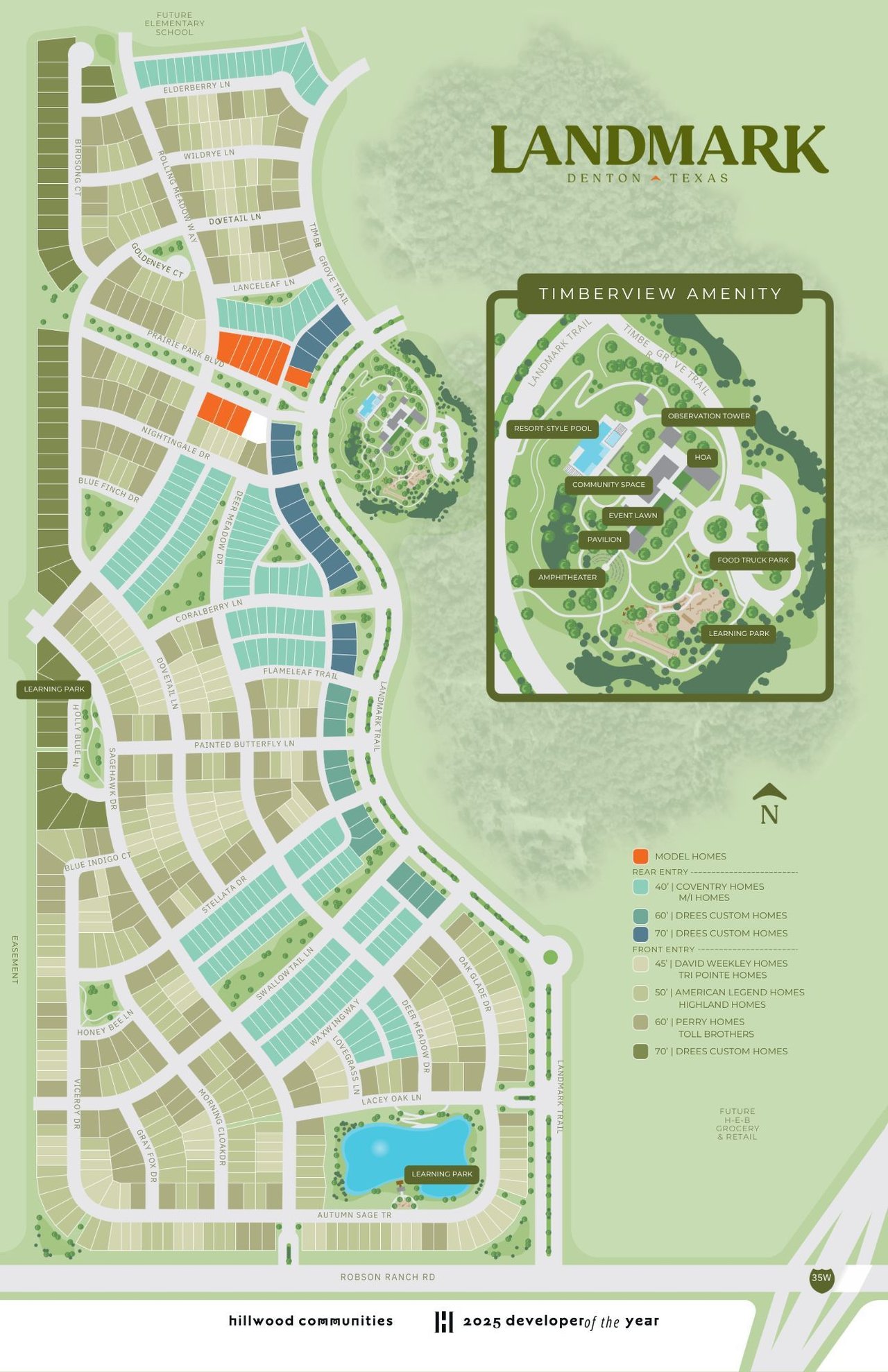
Location: I-35W and Robson Ranch Road, Denton, Texas Size: 3,200 acres, 6,000+ homes at buildout Phase 1: 747 lots, actively selling across all nine builders Builders: American Legend Homes, Coventry Homes, David Weekley Homes, Drees Custom Homes, Highland Homes, M/I Homes, Perry Homes, Toll Brothers, Tri Pointe Homes Price Range: High $300s to $1M+ (varies by lot size and builder; Highland Homes starts around $503,990) Lot Sizes: 40-70+ feet wide Model Homes: Open across multiple builders, with the first homeowners having closed in June 2026
Amenities:
- Timberview Amenity Center: Resort-style pool and gathering spaces
- Extensive trail system throughout 1,100 acres of Parks & Wilds
- Outdoor pavilion and amphitheater with stage
- Multiple parks centered around Pilot Knob Hill's three hilltops
- STEAM learning parks open to public
- Future on-site Denton ISD schools (elementary and middle school planned)
- Planned H-E-B grocery now targeting a winter 2026 opening
- 5 million square feet of mixed-use commercial space planned
Why Buyers Are Choosing Landmark:
- One of Hillwood's most ambitious master-planned communities, with real inventory now on the ground
- Denton ISD schools (new schools planned as community develops)
- Massive scale with 3,200 acres and 1,100 acres of preserved parkland
- Nine premier builders offering diverse options, all actively selling
- Strategic Denton location with I-35W access to both Dallas and Fort Worth
- Nature-centric design with preserved Cross Timbers Forest
Master-Planned Community HOA Considerations
Higher HOA fees deserve careful evaluation before committing to master-planned communities.
What Your HOA Dues Cover:
Typical master-planned community HOAs maintain:
- Amenity center staffing and maintenance
- Common area landscaping
- Trail systems
- Parks and playgrounds
- Lifestyle programming and events
- Community management services
- Reserve funds for major repairs and replacements
HOA Rules and Restrictions:
Master-planned communities typically maintain stricter standards than standard subdivisions:
- Architectural review for exterior changes
- Landscaping maintenance requirements
- Vehicle parking restrictions
- Fence and storage building specifications
Review HOA covenants, conditions, and restrictions (CC&Rs) before purchasing to verify rules align with your lifestyle and plans.
Part 8: Negotiating With Builders in 2026
Current Market Leverage Points
The 2026 new construction market provides buyers with negotiating leverage not seen since 2019-2020. Understanding how to use this leverage delivers significant savings.
Inventory Home Opportunities
Spec homes and inventory sitting for 30+ days signal builder motivation. These homes represent carrying costs—interest on construction loans, opportunity costs on capital, and pressure to hit sales targets.
When evaluating inventory homes, ask:
- "How long has this home been available?"
- "What incentives are available on inventory homes that aren't offered on to-be-built homes?"
- "Are there any additional considerations for homes that have been complete for 60+ days?"
Builders may offer:
- Additional rate buydowns (3-2-1 instead of 2-1)
- Increased closing cost credits ($15,000-$25,000 vs. standard $10,000)
- Price reductions (rare, but possible on older inventory)
- Free upgrades or included items (fencing, landscaping, blinds)
Quarter-End and Year-End Timing
Public builders report earnings quarterly and face intense pressure to hit sales targets. Private builders have similar fiscal year pressures.
Key negotiating windows:
- Last two weeks of fiscal quarters (March 31, June 30, September 30, December 31)
- Final two weeks of calendar years
- Month-end when sales teams have monthly targets
Builders in these windows become more flexible on pricing, incentives, and terms to close deals that count toward current period targets.
What You Can (and Can't) Negotiate
Understanding which elements are negotiable focuses your efforts on productive discussions.
Typically Negotiable:
Incentives and Credits Builders have significant flexibility on:
- Rate buydowns (temporary or permanent)
- Closing cost credits
- Design center credits
- Free options or upgrades
These costs come from builder margins without reducing the reported sales price (which matters for builder comps and financing).
Lot Premiums Builders assign premium pricing to corner lots, cul-de-sacs, and preferred positions. These premiums are often negotiable, especially if lots have been available for extended periods.
Included Items Builders may include items normally charged as extras:
- Upgraded appliance packages
- Blinds or window treatments
- Landscape packages
- Fencing
- Garage door openers or additional remotes
Contract Terms Some builders show flexibility on:
- Earnest money amounts
- Option periods
- Closing date flexibility
- Contingency inclusions (rare, but possible)
Rarely Negotiable:
Base Home Price Builders maintain published base prices for each floor plan and rarely reduce them directly. Price reductions impact comparable sales data for future buyers and financing appraisals.
Exception: Older inventory homes sitting 90+ days may see direct price reductions, particularly approaching quarter-end.
Standard Features What's included in base pricing is set. You can upgrade at the design center, but you can't reduce the base price by removing standard features you don't want.
Construction Timeline Builders provide estimated timelines but rarely guarantee specific completion dates. Supply chain issues, weather, labor availability, and permitting delays create variables beyond builder control.
Warranty Terms Texas HB 2024 mandates minimum warranty coverage, and most builders offer consistent warranty terms across all homes. These terms aren't negotiable.
Working With Builder Sales Agents
Builder sales agents occupy a complex position. They work for the builder but often develop genuine relationships with buyers and want buyers to be happy.
Building Productive Relationships:
Be Respectful Sales agents deal with difficult customers regularly. Approaching interactions professionally and respectfully creates goodwill that may help your negotiation efforts.
Be Specific "What's your best offer?" generates less productive responses than "Can you offer a 3-2-1 buydown instead of the 2-1, plus an additional $5,000 in design center credits?"
Be Transparent About Your Timeline Sales agents prioritize buyers ready to proceed over those in early research phases. If you're serious and ready to move forward, communicate this clearly.
Acknowledge Their Constraints Sales agents have approval authority limits. Requests beyond their limits require sales manager or regional approval. Understanding this helps you navigate the approval process.
Part 9: Closing Day and Beyond
Final Walk-Through
Your final walk-through occurs immediately before closing—typically the day of or the day before your scheduled closing appointment.
Purpose of Final Walk-Through:
This is not a punch list walk-through (that happened earlier). This walk-through verifies:
- Punch list items have been completed as promised
- No new damage occurred during punch list work
- The home is in the same condition as your previous walk-through
- All agreed-upon items are present and functional
What to Check:
All Punch List Items Verify every item on your punch list was corrected. If items remain incomplete, document them with photos and note them on your final walk-through form.
Many buyers ask: "Should I delay closing if punch list items aren't complete?" This is a judgment call based on:
- Item severity (cosmetic vs. functional)
- Builder reputation for post-closing completion
- Your moving timeline pressure
- Leverage you retain after closing
Major functional issues (HVAC not working, plumbing leaks, significant safety concerns) justify delaying closing. Minor cosmetic items typically don't.
Cleanliness The home should be clean and ready for occupancy. Construction debris should be removed, surfaces cleaned, and windows washed. If cleaning is inadequate, note it for post-closing correction.
Appliances and Fixtures Test everything:
- All appliances operate correctly
- Plumbing fixtures have no leaks and drain properly
- Light switches and outlets function
- Garage door operates smoothly
- HVAC produces proper heating and cooling in all rooms
- Windows and doors open, close, and lock correctly
Exterior Condition Walk the property exterior looking for:
- Completed landscaping and sod installation
- Proper grading away from foundation
- No damage to siding, brick, or stone
- Properly installed gutters and downspouts
- Correct house numbers and mailbox
Garage and Mechanical Areas
- Garage door operates smoothly with emergency release functional
- Water heater present and operating
- Electrical panel properly labeled
- HVAC units running
- No visible damage or installation issues
Closing Day Process
New construction closings are typically straightforward if you've maintained communication with your lender and builder throughout the process.
Required Items to Bring:
- Government-issued photo ID
- Cashier's check or proof of wire transfer for closing funds (your closing disclosure specifies exact amount)
- Proof of homeowners insurance (your lender requires this)
- Copy of final walk-through documentation
What You'll Sign:
Closing involves signing numerous documents:
- Mortgage note (your promise to repay the loan)
- Deed of trust (security instrument giving lender claim to property if you default)
- Closing disclosure (final accounting of all closing costs)
- Builder warranty documents
- HOA acknowledgments and documents
- Title company standard forms
- Lender disclosures and acknowledgments
Expect the signing process to take 1-2 hours. Your title company or closing attorney will explain each document, but you should have reviewed your closing disclosure 3-5 days before closing to understand costs.
Keys and Possession
Most builders transfer keys and possession at the conclusion of the closing appointment. You can literally move in that afternoon.
Some builders schedule key transfer for a specified time after closing (once closing documents have been processed and loan has been funded). Verify your possession date before scheduling movers.
What Happens to Your Earnest Money and Option Fee:
Your earnest money and option fee (if any) credit toward your closing costs or down payment. These amounts appear on your closing disclosure, reducing the cash you need to bring to closing.
Understanding Your Builder Warranty
Texas HB 2024 mandates minimum builder warranty coverage, but understanding how warranties work in practice helps you manage expectations.
Statutory Warranty Requirements:
- 1 Year: Defects in materials and workmanship
- 2 Years: Major mechanical and electrical systems (HVAC, plumbing, electrical)
- 6 Years: Major structural components (foundation, load-bearing elements, roof structure)
What Warranties Cover (and Don't Cover):
Covered:
- Construction defects resulting from improper workmanship
- Materials that fail due to defects or improper installation
- Systems that don't function properly due to installation issues
- Foundation movement beyond acceptable tolerances
- Roof leaks due to improper installation
Not Covered:
- Normal wear and tear
- Damage from homeowner neglect or misuse
- Settling and minor cracks within acceptable ranges
- Issues caused by homeowner modifications
- Landscaping (typically separate warranty)
- Cosmetic issues that don't affect function
How to Submit Warranty Claims:
Most builders provide online warranty portals for submitting claims. The typical process:
- Document the issue with photos and detailed description
- Submit claim through builder's warranty system
- Builder reviews and determines coverage
- Builder schedules repair with their contractors
- Repair completed and documented
Response Timelines:
Builders typically categorize warranty items by urgency:
- Emergency (no heat in winter, no A/C in summer, major plumbing leaks): 24-48 hour response
- Urgent (HVAC not working in moderate weather, plumbing issues causing minor damage): 5-7 day response
- Routine (cosmetic issues, minor defects): 30-60 day response
Warranty Challenges and Resolutions:
Sometimes builders deny warranty claims you believe should be covered. If this happens:
- Review your warranty documentation carefully. Ensure your issue falls within covered categories.
- Request detailed explanation of denial. Builders should explain why they're denying coverage with reference to specific warranty terms.
- Escalate within builder organization. If your warranty coordinator denies a claim you believe is valid, escalate to warranty managers or customer care leadership.
- Document everything. Photos, emails, and written records create accountability and support potential dispute resolution.
- Seek third-party inspection. If disputes involve technical questions (is this foundation movement within tolerance? Is this roof leak from installation or storm damage?), third-party inspector opinions help resolve disagreements.
- Understand legal remedies. Texas law provides recourse for builders who refuse to honor statutory warranty obligations, but litigation should be a last resort after exhausting builder-level resolutions.
First-Year Maintenance Tasks
New homes require less maintenance than older homes, but several first-year tasks ensure longevity and warranty protection.
First 30 Days:
- Change HVAC filters (and set reminder to change quarterly)
- Test all smoke and carbon monoxide detectors
- Locate and label main water shut-off and electrical panel breaker
- Document home condition with comprehensive photos
- Review owner's manuals for all appliances and systems
- Register appliances for warranty coverage
First 3 Months:
- Inspect for minor cracks or settling (normal, but document for baseline comparison)
- Check caulking around windows, doors, tubs, and showers
- Test all plumbing fixtures for leaks or slow drains
- Verify garage door safety features function properly
- Inspect roof from ground for missing or damaged shingles
- Check grading around foundation after heavy rains (water should drain away from home)
First Year Seasonal Tasks:
- Clean or replace HVAC filters quarterly
- Inspect and clean gutters twice yearly (spring and fall)
- Test irrigation system before summer (if installed)
- Re-seed or sod any landscaping damage
- Touch up exterior paint if needed
Monitoring for Warranty Issues:
During your first year, watch for:
- Foundation cracks wider than 1/16 inch or growing cracks
- Doors or windows that become difficult to operate
- HVAC struggles to maintain temperature
- Plumbing leaks or persistent slow drains
- Electrical outlets or switches that fail
- Roof leaks or water stains on ceilings
- Significant concrete cracking in driveway or walkways
Document and report these issues promptly through your builder's warranty system.
Part 10: Frequently Asked Questions
1. Should I buy now or wait for interest rates to drop?
This is the most common question in the 2026 market. Here's the honest answer: nobody knows when or if rates will drop significantly.
What we do know: builders are offering incentives at 5-year highs specifically because current rates are keeping some buyers on the sidelines. If rates drop to 4-5%, builder incentives will largely disappear, and competition for homes will increase.
The financially sound approach: if you find the right home with strong incentives and can afford the payments, proceed. You can refinance if rates drop significantly, but you can't retroactively buy today's home at today's prices with today's incentives if the market shifts.
2. How much should I budget for upgrades beyond the base price?
Most new construction buyers spend $15,000-$40,000 beyond base price on design center selections and options. This wide range reflects different priorities and budgets.
A conservative approach: budget 5-7% of your base price for essential upgrades (flooring, countertops, primary bath improvements). You can increase from there based on wants vs. needs.
Remember that every $1,000 in upgrades adds approximately $5-6 to your monthly payment over 30 years at 6-7% rates. View upgrades through this lens to maintain perspective.
3. Can I negotiate directly with builders, or do I need a buyer's agent?
You can negotiate directly, but most buyers achieve better results working with experienced buyer's agents at no direct cost (buyer's agent compensation is already factored into the price).
Buyer's agents provide:
- Negotiation expertise and market knowledge
- Design center guidance on resale value
- Construction oversight at key milestones
- Contract review and protection
4. What's the difference between a master-planned community and a regular neighborhood?
True master-planned communities offer:
- Comprehensive long-term development planning
- Resort-style amenity centers
- Year-round lifestyle programming and events
- Extensive trail networks and parks
- Mixed-use development with commercial and retail
- Higher HOA fees funding amenities and programming
Regular neighborhoods offer:
- Basic amenities (pool, playground)
- Lower HOA fees
- Less structured community programming
- Simpler governance structures
The right choice depends on your priorities and whether amenities and programming justify higher costs.
5. How long does new construction take from contract to closing?
Timelines vary significantly:
- Inventory homes (already complete): 30-45 days to closing
- Spec homes (under construction): 2-4 months to completion plus 30-45 days to closing
- To-be-built homes: 6-9 months to completion plus 30-45 days to closing
Variables affecting timelines:
- Weather delays (especially foundation and exterior work)
- Material availability
- Labor scheduling
- Municipality inspection scheduling
- Permit processing
- Buyer-driven changes or delays
Plan for flexibility and don't lock yourself into firm timelines based on estimated completion dates.
6. Should I wait to buy until more amenities are complete in new communities?
This is a trade-off decision. Buying in early phases offers:
- Maximum lot selection
- Lower pricing (often)
- Ground-floor community involvement
- Potential for appreciation as community builds out
Waiting until later phases offers:
- Complete amenities available immediately
- Mature landscaping and established neighborhoods
- Proven community identity
- Less construction activity
Neither approach is universally better—it depends on your priorities and patience.
7. What happens if my home doesn't appraise for the purchase price?
If your home appraises below the contract price:
- Negotiate with the builder to reduce the price to appraised value
- Bring additional cash to cover the difference between appraised value and purchase price
- Terminate the contract if allowed (most builder contracts don't include appraisal contingencies, but review your specific contract)
- Challenge the appraisal by providing supporting data on recent comparable sales your lender can submit to the appraiser
To minimize appraisal risk: buy during stable markets, choose popular floor plans with strong comparable sales data, and limit design upgrades to items that add appraisable value.
8. Do builder-affiliated lenders offer genuinely better terms, or should I shop around?
Builder-affiliated lenders often offer significantly better complete packages (rate, fees, and incentives) than outside lenders. However, "often" doesn't mean "always."
The right approach: get complete loan estimates from both builder-affiliated lenders and 2-3 outside lenders. Compare total costs including all incentives.
If the builder-affiliated lender offers $15,000 in incentives but charges 0.25% higher rates, calculate whether the rate difference over 30 years costs more or less than the incentive value. Often, the incentives more than compensate for modest rate differences.
Never accept significantly worse loan terms just to get builder incentives.
9. How do I know if a builder has a good reputation?
Research builders through:
- Online reviews (Google, Facebook, Better Business Bureau): Look for patterns in complaints, not isolated negative reviews (every builder has some)
- Local builder associations: Builders in good standing with local HBA (Home Builders Association) chapters typically maintain higher standards
- Warranty claim responsiveness: Ask your buyer's agent about builders' reputations for handling warranty issues
- Model home quality: Builders who maintain high-quality model homes typically extend that care to production homes
- Sales agent transparency: Builders who encourage questions, provide detailed information, and don't pressure decisions tend to deliver better overall experiences
Warning signs: builders who pressure immediate decisions, discourage third-party inspections, or have numerous serious BBB complaints warrant extra caution.
10. What's the single most important thing to know about buying new construction?
Builder contracts are written to protect builder interests, not buyer interests. Everything is negotiable until you sign, but difficult to change after. Take time to:
- Understand what you're signing
- Get everything in writing
- Work with experienced representation
- Don't let excitement override careful evaluation
New construction is an excellent choice for many buyers, but it requires understanding a different process than resale home purchases. Education and representation are your best tools for successful outcomes.
Making Your New Construction Decision
Buying new construction in 2026 offers compelling opportunities for buyers who approach the process strategically. Current market conditions—builder incentives at 5-year highs, inventory availability, and motivated sellers—create advantages not seen since 2020.
The key to successful new construction purchase is education. Understanding builder contracts, design center strategy, lot selection considerations, and negotiation approaches transforms you from a passive buyer accepting builder terms to an informed consumer making strategic decisions.
Master-planned communities, particularly those developed by Hillwood Communities, represent some of North Texas's most compelling residential value propositions. The combination of thoughtful long-term planning, resort-style amenities, lifestyle programming, and strategic location creates neighborhoods where families don't just live—they thrive.
Whether you're drawn to the foundational agrihood concept of Harvest, the evolved Town Square design of Pecan Square, the natural beauty of Treeline, or the ground-floor opportunity at Landmark, Hillwood's commitment to quality and community building delivers value that extends far beyond transaction day.
Your journey starts with education, continues with strategic decision-making, and culminates in a home that serves your family well for years or decades. This guide has equipped you with the knowledge to navigate every phase of new construction purchase with confidence.
Now it's time to put this knowledge into action.
Take Your Next Step
Whether you're just beginning your new construction research or ready to start touring communities, we're here to help.
Contact the Miranda Realty Team:
📧 Email: [email protected]
📱 Call or Text: 940.577.2051
🌐 Learn More: mirandarealty.team/team
Subscribe to Alliance Network for North Texas Market Intelligence:
Get monthly updates on new construction, market trends, and Alliance corridor developments:
🔗 beacons.ai/alliancenetworktx
Areas We Serve: Denton | Argyle | Northlake | Justin | Greater DFW
Our Mission:
Spirit-led counsel and straight talk (no fluff)
We specialize in helping first-time buyers, out-of-state relocations, and new construction purchases navigate North Texas real estate with confidence. Our team brings decades of combined experience, personal real estate investment success, and deep community knowledge to every transaction.
Related Resources
Continue Your Education:
- Complete Guide to Buying a Home in North Texas in 2026 - Your comprehensive resource covering every aspect of the home buying process in North Texas
- Pecan Square by Hillwood: Complete Guide to Northlake's Award-Winning Master-Planned Community - Northlake's award-winning master-planned community with on-site schools and Town Square amenities
- Harvest by Hillwood: Complete Community Guide - Deep dive into one of North Texas's premier master-planned communities
- Treeline by Hillwood: Justin's Newest Master-Planned Community - Complete guide to Treeline including builders, pricing, and Northwest ISD schools
- Landmark by Hillwood: Denton's $10 Billion Master-Planned Community - A 3,200-acre development anchored by Pilot Knob, Denton's highest point at approximately 830 feet
- Furst Ranch Home Sales Now Open in Flower Mound - Argyle ISD new construction at the western gateway to Flower Mound, from all nine active builders
- Wildflower Ranch: Your Complete Guide to Fort Worth's Resort-Style Master-Planned Community - Northwest ISD schools, a signature lazy river, and 13 active builders north of Fort Worth
- Moving from Florida to Texas: A Smarter Home Search - What Florida buyers need to know before relocating to North Texas
- Why You Need a Realtor When Buying New Construction (Yes, Really) - How buyer representation protects you in a builder transaction at no extra cost
A Final Word
New construction represents more than a transaction—it's the foundation of your family's next chapter. The decisions you make during this process impact your daily life, your financial position, and your long-term wealth building.
Approach this journey with patience, education, and strategic thinking. Trust the process, ask questions until you understand, and don't let excitement override careful evaluation.
Your dream home is out there. Armed with the knowledge in this guide, you're prepared to find it, negotiate effectively for it, and make confident decisions every step of the way.
Let's find your home.
The Miranda Realty Team
Doing good business with good people, for the glory of God and the good of others
This guide was created in January 2026 and reflects current market conditions, builder practices, and Texas regulations as of that date. Real estate markets, builder incentives, and regulations change over time. Consult with real estate professionals for the most current information specific to your situation.