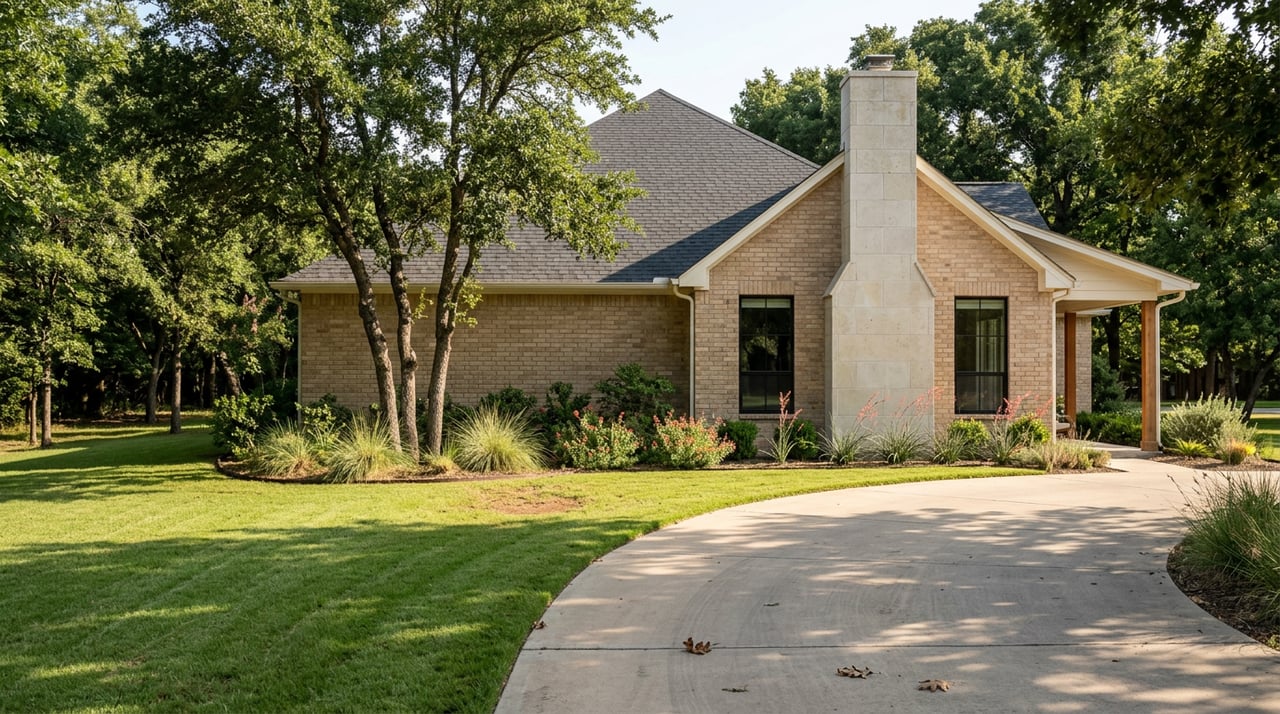
A buyer's agent in Harvest can pull comps, write an offer, and close in 30 days without ever thinking about a tank in the ground. List a 2.5-acre custom home off Hickory Hill or a 1990s build along FM 407, and the same 30 days now belongs to Denton County Public Health, your buyer's lender, and a TCEQ-licensed inspector who has not yet returned your call.
The friction is rarely the septic system itself. It is the paper trail Argyle sellers were supposed to be building for years before the sign went in the yard. Most have not been, and that gap is what shows up at the closing table.
Here is the part worth understanding before you list.
The disclosure your agent cannot fill out for you
Texas Property Code §5.008 is the disclosure rule every Texas seller knows. The form most Argyle sellers do not know about until day three of the option period is TXR-1407, the "Information About On-Site Sewer Facility" addendum. It is required any time the property runs on a private septic system, and per the 2026 Texas Septic Guide's reading of TREC practice, the seller fills it out personally. Not the agent. Not the title company.
The form asks for system type (conventional, aerobic, or holding tank), approximate age, maintenance history, and known defects. A blank or a guess on any of those lines is what plaintiffs' attorneys point at when they file under the Deceptive Trade Practices Act. An honest "unknown" is almost always safer than a confident wrong answer.
If you bought the home five years ago and have never seen the original OSSF permit, the planning materials are on file with Denton County Public Health, Environmental Health Division. You can request them before you list. That is the single highest-leverage hour an Argyle seller can spend.
What Denton County actually expects at transfer
The Denton County OSSF order does more than govern installation. It binds the seller at the moment of sale. Pulled directly from the county's Septic Permit Application Packet and "What You Must Know" homeowner guide, here is what the order requires when a 76226 home with a septic system changes hands:
- Permit transfer. The seller must request a transfer of the OSSF permit to the buyer at sale. This is a county action, not something a title company handles by default.
- Maintenance contract submission. For systems requiring a continuous maintenance contract, a signed contract must be on file with Environmental Health within 30 days of the property transfer.
- Deed certification on file. For certain OSSF types, Denton County requires a deed recording providing public notice that the system exists on the property, plus proof of the recording back to the permitting authority.
None of these are optional. Walking into closing with any of the three unresolved is how a clean contract turns into a 10-day delay while a new buyer scrambles to sign a maintenance contract that should have been transferred from the seller.
Aerobic vs conventional: the cost gap that quietly drives buyer fear
Roughly a third of homes in the 76226 ZIP still operate on a private system, and a meaningful share of those are aerobic, the surface-spray systems common on lots where conventional drainfields will not pass a site evaluation. Aerobic systems carry a maintenance burden that buyers from Plano or Frisco often do not understand until the inspection report lands.
Under 30 TAC Chapter 285, aerobic systems must be inspected by a TCEQ-licensed maintenance provider every four months, three times per year, with reports filed to the county permitting authority within 14 days of each visit.
| Item | Conventional | Aerobic |
|---|---|---|
| Required inspections per year | 0 by rule | 3 |
| Annual all-in cost | $75 to $150 | $600 to $1,000 |
| Contract required by law | No | Yes |
| County reporting | No routine filing | Filed within 14 days of each visit |
For a buyer looking at a $750,000 Argyle home, the dollar gap is small. The cognitive gap is enormous, and it is where deals stall. Sellers who can hand over three years of clean inspection reports, a current contract, and a paid-through-end-of-year receipt take the entire conversation off the table.
Sellers who hand over nothing have just invited the buyer to ask for a $10,000 escrow holdback. Local seller-side reporting suggests buyer's lenders will sometimes demand exactly that figure when a recent pump-out appears in records with no corresponding inspection.
The loan type rewrites the timeline
Texas state law does not require a septic inspection to sell a home. Your buyer's lender often does, and which lender they use changes everything about your week three.
FHA appraisers operate under HUD Handbook 4000.1, which requires the appraiser to look for signs of septic failure as part of the property condition assessment. Surface sewage, odors, or wet spots over the drainfield trigger a mandatory licensed inspection before the loan can close. VA appraisers follow parallel rules under Chapter 12 of the VA Lenders Handbook, evaluating the system against Minimum Property Requirements. Conventional lenders are quieter about it until the appraiser writes a comment, at which point the inspection becomes a condition of funding.
What this means for the seller: a cash buyer can skip the septic inspection entirely. An FHA buyer cannot. A buyer who switches loan products mid-contract, which happens, can move you from one column to the other in a single phone call.
The practical move is to inspect before you list. A pre-listing inspection costs $300 to $600 and converts the unknown into a document. If something is wrong, you find out on your timeline, not the buyer's.
The 10-acre exemption people misread
Single-family homes on 10 or more acres can be exempt from the standard OSSF permitting process under TCEQ rules. Argyle has lots that qualify. Sellers and listing agents sometimes read this as "no paperwork required."
What the rule actually says: the system still requires a site evaluation by a licensed professional, must not cause pollution or nuisance, and cannot surface-discharge. The exemption removes the construction permit, not the seller's disclosure obligation, not the buyer's lender's appraisal triggers, and not the buyer's right to an inspection during the option period. Marketing a 12-acre property as "no septic permit needed" is technically true and practically misleading. The transaction friction is identical.
The well question your buyer's lender is starting to ask
A growing share of Argyle properties west of I-35W and along the older Hickory Hill and Sam Davis corridors run on private or shared wells. The TREC Seller's Disclosure asks for water source, and the answer "private well" sets off its own checklist.
Lenders increasingly ask for a recent potability and bacteriological test, typically within 90 days of closing. Shared wells require a written shared-well agreement that survives the sale, which often does not exist in writing because the original neighbors handled it by handshake in 1998. Setbacks matter: under 30 TAC 285, wells must sit 50 to 100 feet from septic components, and a buyer's inspector will measure.
The TWDB Water Data Interactive viewer is a free public tool that lets you pull the original drilling report for most wells in Denton County. If you can hand a buyer a driller's log showing depth, casing, and date drilled, you have eliminated half of the questions they were going to ask their lender.
A pre-listing checklist that survives Denton County
Two weeks of work before the photographer arrives, and most of the friction described above never reaches your closing table.
- Pull the OSSF permit and planning file from Denton County Public Health, Environmental Health Division.
- Order a pre-listing septic inspection from a TCEQ-licensed provider. Get the report and the pump-out receipt in the same visit.
- If the system is aerobic, verify the maintenance contract is current and that the most recent inspection report was filed to the county within the 14-day window.
- Locate the well driller's report via the TWDB Water Data Interactive. If a shared well exists, find the written agreement or sit down with the co-owners and create one.
- Complete TXR-1407 yourself, with the permit file in front of you. Attach it to the listing before the first showing.
- If the property is on 10 or more acres and was never permitted, commission a current site evaluation by a licensed evaluator. This is the document that replaces the permit in your buyer's lender's file.
- Confirm with your title company that the OSSF permit transfer and any required deed certification will be handled at closing, not assumed.
None of this is glamorous, and none of it photographs well. It is, in our experience, the difference between a 35-day close on a $900,000 acreage home and a 70-day close that ends in a $15,000 concession.
Argyle's housing stock is not Harvest. The transactions are not Harvest's either. A boutique team that has actually sat at these closing tables can save you the surprises that turn a strong offer into a fragile one.
If you are weighing a sale on a septic-and-well property anywhere in 76226 and want a clear-eyed read on what your home will actually require to close, Miranda Realty Team would be glad to walk the property with you and start the paperwork on your timeline, not the buyer's. Get Your Free Home Valuation and we will bring the Denton County file along with the comps.
