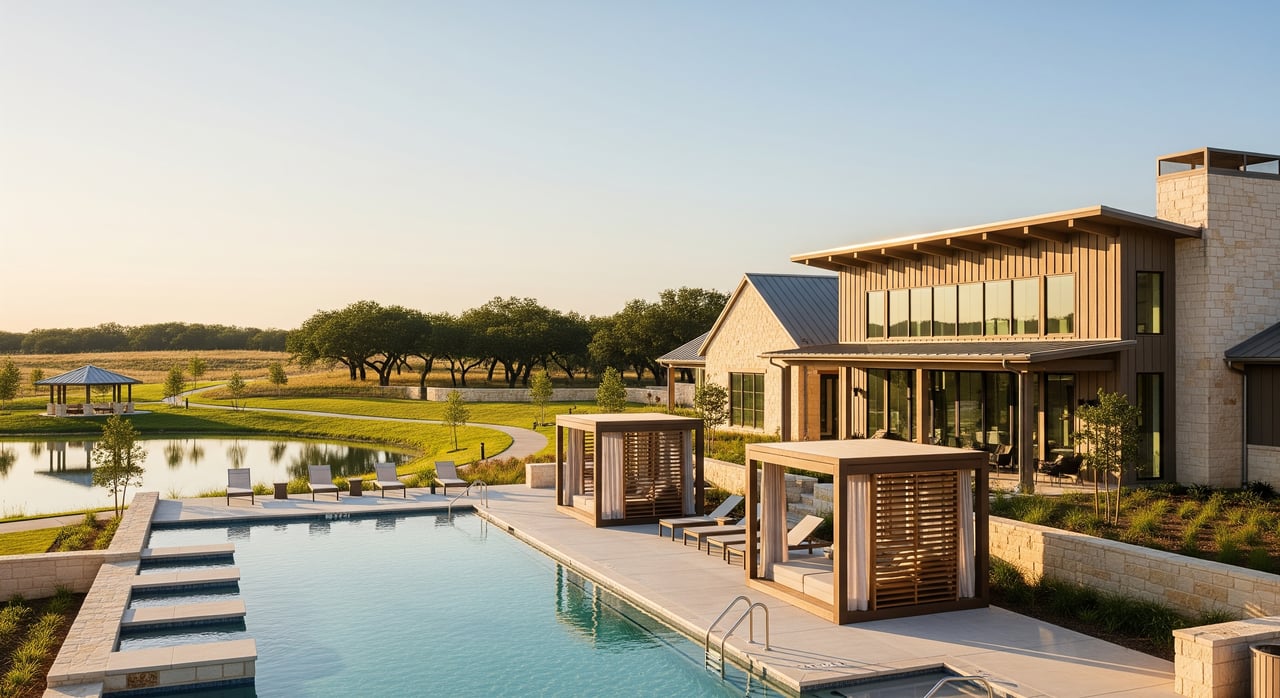
Thinking about a master-planned community near Justin but not sure what the amenities really mean for your daily life and budget? You’re not alone. Many buyers moving into Denton County want more space, on-site recreation, and a neighborhood feel without surprises at closing. In this guide, you’ll learn what amenities are common around Justin and the broader DFW suburbs, how they can impact HOA costs and routines, and what to ask on tours so you can buy with confidence. Let’s dive in.
What “master-planned” means near Justin
In the Justin area, master-planned can describe anything from a simple trail-and-park setup to a community with a clubhouse, pools, fitness rooms, sports courts, and a calendar of events. The northern DFW suburbs continue to grow, and many families choose these neighborhoods for newer homes, practical amenities, and proximity to commuter routes. The right fit comes down to your priorities, your typical week, and the fees that support those features.
Core amenities you’ll see
Clubhouses and indoor spaces
Many communities offer a clubhouse or community center with event rooms, kitchen space, and meeting areas. You can host a birthday party, attend a neighborhood meeting, or join a class without leaving your subdivision. These spaces add convenience but also affect the HOA’s cleaning, utilities, and staffing line items.
Pools and splash pads
Summer heat makes aquatic features popular. You may see resort-style pools, shaded family pools, lap lanes, and splash pads for younger kids. Pools are high-appeal amenities that also carry higher operating costs. Ask about seasonal staffing, lifeguard policies, and hours. Splash pads can be a lower-maintenance alternative with plenty of kid appeal.
Trails, parks, and playgrounds
Paved and natural trails connect blocks, pocket parks, greenbelts, and sometimes nearby schools. These paths support daily walks and bike rides away from traffic. Playgrounds and picnic areas add quick, close-by options for after-school downtime. Trails are often lower-cost to maintain than pools but still require long-term planning for repairs.
Sports courts and fields
Expect to see basketball, tennis, or pickleball courts, and occasionally soccer fields. These features can be in high demand on weekends. Lighting and resurfacing needs factor into the community budget.
Everyday convenience and safety
Some communities include dog parks, community gardens, or on-site retail. A few offer gated entries or private security. Gated access can raise perceived security, but it also increases operating and capital costs. Retail components are typically privately managed and can evolve over time.
Community events and programs
From movie nights and holiday festivals to kids’ camps and playgroups, programming brings neighbors together. These events require HOA staff time and budget, so it helps to review the community calendar and ask how programs are funded and scheduled.
Transportation and connections
Larger, well-connected developments may include designated school bus stops, park-and-ride areas, or even bike-share options. These are less common but can support smoother commutes.
How amenities shape daily life
Amenities can change how you spend your time. Trails and parks make it easier to get outside every day. Pools and clubhouses bring recreation closer to home. In busier communities, you may need to reserve a court or event room, and some pools have peak times that feel crowded in summer. Many aquatic and outdoor features are seasonal. Ask about maintenance windows and any closures that could affect your routine.
Community guidelines also matter. Expect rules on hours of use and noise. If you enjoy a quiet Saturday morning swim, or your kids love pickup games at dusk, make sure the rules and hours match your lifestyle.
HOA and POA costs in Texas
How dues are set and what they cover
In Texas, homeowner associations (HOAs) or property owners’ associations (POAs) set dues to cover common-area maintenance, landscaping, amenity operations, insurance, and reserves for long-term repairs. Dues can be monthly, quarterly, or annual. The more complex the amenities, the higher the operating costs tend to be. Trash or recycling service may be included in some communities. Always confirm the current dues, what they include, and the payment schedule.
Reserves and special assessments
Healthy reserve funds help cover big-ticket replacements like pool surfaces, playground equipment, and clubhouse roofs. A current reserve study and recent financial statements give you insight into how well the community is planning ahead. If reserves are low, the risk of special assessments rises, especially when amenities age or new features are added mid-development.
Management and vendor contracts
Some communities are self-managed by a volunteer board, while others hire a professional management company. Professional management can deliver consistent programming and maintenance, but it often comes with higher operating costs. Vendor contracts for landscaping, lifeguards, and security are recurring expenses you can usually see in financials or meeting minutes.
Texas disclosures and your rights
HOAs and POAs in Texas are governed by state statutes that set rules for meetings, records access, notices, and collections. During a sale, sellers typically provide a resale certificate and association documents. Confirm what is required early in your contract timeline so there are no delays. Your agent and title company can guide you, and you should review all association documents before you waive any contract rights.
Resale and long-term value
Amenities can support resale value when they match what local buyers want. For many family buyers, features like safe-feeling play areas, trails that link to neighborhood parks, and active community programming can increase demand. On the other hand, amenities that are overbuilt for the market or poorly maintained can become a liability. Pay close attention to the condition of facilities, the clarity of rules, and the HOA’s financial transparency. These are key signals for future value.
Smart questions to ask on tours
Bring this short list to your next community visit:
- What amenities exist today, and which are planned? What is the timeline for future phases?
- Are pools or facilities staffed? What are the hours and lifeguard policies?
- How do you reserve courts or event rooms? Are there fees or deposits?
- When are amenities busiest during summer and weekends?
- Are there gates or security services? What hours and measures are in place?
- Are short-term rentals allowed? Is there a rental cap?
- What programs are offered for kids and community events through the year?
Documents to request before you buy
Ask your agent to help you collect and review:
- Current annual budget and latest financial statements
- Most recent reserve study and reserve fund balance
- Current dues amount, payment schedule, and recent increase history
- HOA meeting minutes from the past 6 to 12 months
- CC&Rs, bylaws, and rules and regulations
- Management contract and key vendor contracts (landscaping, lifeguards, security)
- Details on any recent or pending special assessments and capital projects
- Insurance summary for common areas and any homeowner responsibilities
- Resale certificate template and timeline for delivery
Red flags to watch for
- Low or no reserves combined with aging amenities
- Frequent special assessments or sharp dues increases without clear planning
- Vague or restrictive rules that limit everyday use of amenities
- High board turnover or frequent management changes
- Visible deferred maintenance at pools, playgrounds, or landscaping
- Unclear reservation systems or inconsistent enforcement of rules
Fit your lifestyle and budget
Choosing the right master-planned community near Justin is about more than a great pool or a shiny clubhouse. It is about how those features support your routine, how sustainable the fees are, and whether the association is planning well for the future. If you value daily walks, look for trail-connected streets and pocket parks. If you love summer swim time, ask about peak hours and staffing. If you want a strong sense of community, check the event calendar and talk to neighbors you meet on your tour.
When you pair an honest look at amenities with a clear read on the HOA’s finances and rules, you set yourself up for a smoother move and a home that fits your season of life.
Ready to compare neighborhoods, tour new builds, or review HOA documents with a local advisor? Reach out to Edson Miranda for hands-on guidance, neighborhood insights, and buyer advocacy for both pre-owned and new construction in Denton County.
FAQs
What amenities are most common near Justin?
- You’ll often find pools or splash pads, trails and greenbelts, pocket parks and playgrounds, and sometimes clubhouses, fitness rooms, and sports courts. Larger communities may add events and limited on-site retail.
How do HOA dues work in Texas master-planned communities?
- Dues are set by the HOA or POA to fund common-area upkeep, amenities, insurance, and reserves. Frequency varies by community. Always review the current budget, dues schedule, and recent financials.
Are community pools open year-round in Denton County?
- Many pools are seasonal, with hours and staffing that increase in warmer months. Ask about opening and closing dates, lifeguard policies, and any planned maintenance windows.
What should families ask about school access and commute?
- Verify school assignment directly with the district and map your commute during normal travel times. Also check trail connections, bus stop locations, and off-street routes that support daily routines.
How do amenities affect resale value near Justin?
- Well-maintained amenities that align with buyer priorities can boost demand. Poorly maintained or underfunded amenities can hurt resale. Review condition, rules, and the HOA’s financial health.
Which documents should I review before closing in Texas?
- Request the resale certificate, CC&Rs, bylaws, rules, current budget and financials, the most recent reserve study, meeting minutes, and any notices of special assessments or planned projects.
