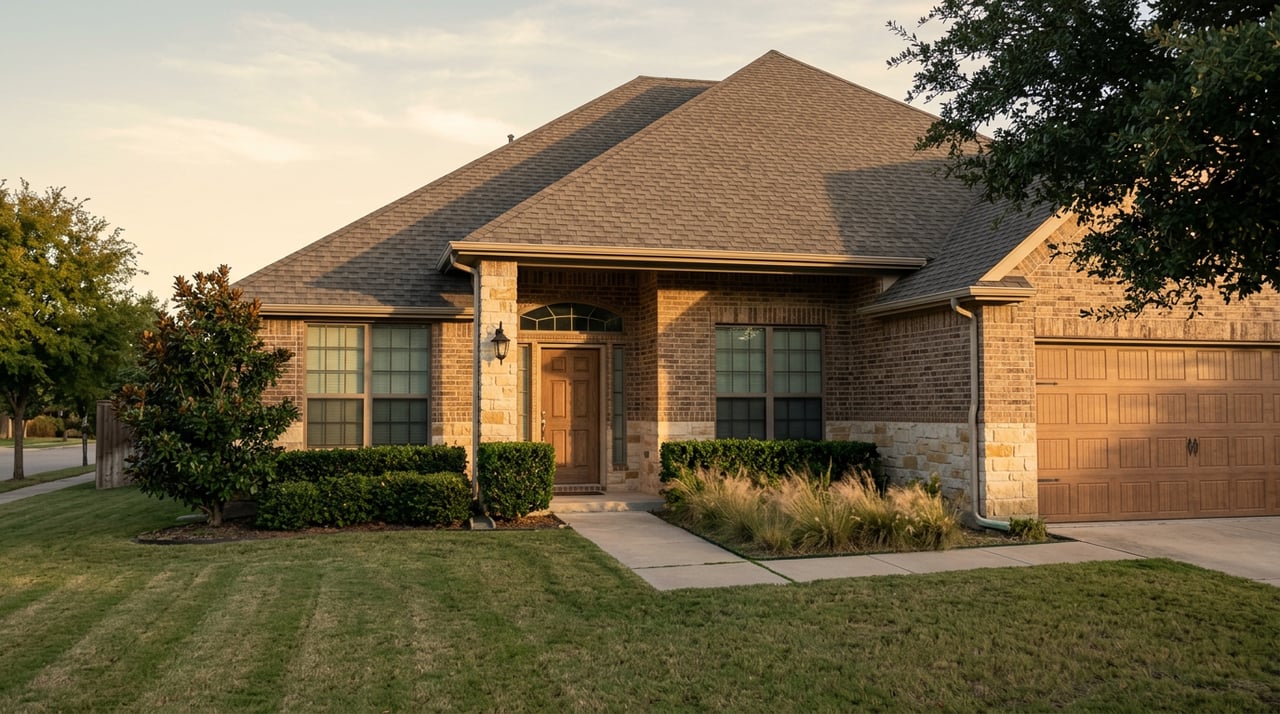
Picture a buyer walking into closing on a house near the University of North Texas that's been listed with photos of a fully furnished guest suite and a spreadsheet of a year's worth of Airbnb bookings. The seller calls it turnkey. The listing agent calls it income-producing. Neither phrase means what the buyer thinks it means, because the one document that actually lets someone legally rent that property short term in Denton isn't attached to the house. It's attached to the person who applied for it, and it expires every December 31 whether the house sells or not.
That's the piece of Denton's short-term rental system that catches people off guard, and it matters right now because the calendar itself creates a gap that has nothing to do with financing, inspection, or title. If you're buying or selling a Denton property that's been operating as an Airbnb or Vrbo, the registration certificate is not a fixture. It's a renewable, capped, person-specific permit, and understanding how it actually works changes how you should price, market, and negotiate one of these deals.
The Certificate Belongs to the Registrant, Not the Deed
The City of Denton has regulated short-term rentals since the 2019 Denton Development Code took effect, and the mechanics are more particular than most sellers realize. Registration runs through the City of Denton's STR Permit System, costs $100, and is valid for exactly one calendar year, January through December. If the applicant isn't the property owner, the city's own Short-Term Rental Information Packet requires a notarized authorization form from the owner before an application will even be accepted. That single requirement tells you what the registration actually is: a personal authorization to operate, not a right that rides along with the property at sale.
That distinction has real consequences the moment ownership changes hands. A new buyer doesn't inherit the seller's certificate. They apply as a new registrant, under their own name, with their own floor plan, parking plan, and proof of insurance, and that application enters the same pool as every other Denton resident trying to get in.
Why the Calendar Traps Almost Every Closing Date
Here's where the timing gets genuinely inconvenient. New applicants can only register starting January 1 of each year. Existing hosts renew during a fixed window, November 1 through December 31. Miss that window as an existing host and you're not renewing anymore. You're a new applicant, competing for whatever room is left under the citywide cap.
Now map that onto a typical home sale. Close today, in mid-September, and the seller's current-year certificate is still technically active in their name, but it does the buyer no good. The buyer has to wait until the following January 1 to apply as a new registrant, which means an income gap of three and a half months minimum, longer if the closing happens later in the fall.
| If your closing falls... | What's true about the STR registration | What the buyer needs to do |
|---|---|---|
| January through October | Seller's certificate for the current year is still theirs alone | Wait for the next January 1 window to apply as a new registrant |
| November 1 through December 31 | Seller can renew for the upcoming year, but only in their own name | Buyer still cannot use it; the January 1 new-applicant window applies |
| Any date, after the sale closes | Seller's registration lapses or transfers to no one | Buyer submits a fresh application and enters the citywide queue |
There is no path in Denton's system where a buyer simply steps into an active registration on closing day. The gap is structural, not a paperwork delay someone forgot to handle.
The Cap Is Already Doing Some of the Work
Even a buyer who times their application perfectly for January 1 still has to clear the citywide ceiling. Denton limits short-term rental registrations across the city, and the rules add a two-per-parcel maximum along with a 100-foot separation requirement between registered rentals, meaning a dense pocket of student-area rentals can hit its practical limit well before the citywide number does. If a buyer is targeting a specific block near campus because that's where the seller's income history was generated, that's exactly the kind of area where separation rules bite hardest. Two other short-term rentals within 100 feet, and a technically available citywide slot still doesn't help.
The city amended its regulations effective January 1, 2025, adding requirements specific to residential zoning districts and multifamily developments, and Denton's public engagement page on the topic notes that the city also removed its old primary-residence requirement around the same period, a change driven by a Fifth Circuit ruling that struck down a similar residency rule in New Orleans as unconstitutional. That change opened the door to more non-owner-occupied registrations competing for the same limited pool, which is worth knowing if you're evaluating how much runway is actually left in a given neighborhood.
The Tax Obligation Starts Over Too
A short-term rental in Denton carries a stacked hotel occupancy tax obligation. The city collects its own 7 percent directly from the property owner, layered on top of the county and state hotel occupancy tax that applies to short-term lodging statewide. None of that transfers automatically either. A new owner has to contact the city's Finance department and set up their own reporting account before collecting a single night's booking, and the reporting and payment cycle runs monthly, due by the 20th of the month following each reporting period.
For a buyer who assumed the tax setup was just another line item to inherit along with the furniture, that's one more administrative step standing between closing day and actual rental income.
The Occupancy Question Sitting Underneath All of This
Separate from the short-term rental rules, Denton also limits how many unrelated people can occupy a single-family zoned home, a rule built with the university-adjacent rental market in mind. That matters for a different reason. If a property near UNT or Texas Woman's University has a rental history built on long-term student leases rather than nightly bookings, a buyer evaluating that income stream needs to know whether the unit's actual occupancy has ever pushed against that limit, because a property that's been quietly out of compliance doesn't become compliant just because it changes hands.
What This Means If You're the Buyer
Before you factor a seller's Airbnb income into your offer, verify the registration status yourself rather than taking the listing's word for it. A few concrete steps make the difference between an informed offer and an unpleasant surprise:
- Confirm whether the current registration is active, and if so, in whose name, since it will not transfer to you regardless of the answer.
- Check the parcel and the surrounding 100 feet for other registered short-term rentals before assuming a slot is available.
- Build a three to four month income gap into your first-year projections if you're closing outside the January registration window.
- Budget for a fresh application, including floor plans, a parking plan, and proof of insurance, as part of your post-closing to-do list rather than a formality.
- Ask your lender how they treat rental income that isn't yet re-established under your own name, since some underwriting approaches don't count a seller's historical STR income the same way a continuing lease would.
What This Means If You're the Seller
If you're marketing a Denton property with short-term rental history, the honest framing is that you're selling a track record, not a license. Present the income as historical performance the buyer can reasonably expect to rebuild, not as something that transfers at the closing table. That framing protects you from a buyer who feels misled after the fact, and it sets a realistic expectation that a knowledgeable buyer will respect more than an inflated one.
A Few Questions Worth Settling Before You Write an Offer
Does a Denton short-term rental permit transfer when the house sells? No. The registration is issued to a specific applicant for a specific calendar year, and a change in ownership does not carry it forward. The new owner has to apply on their own.
What happens if the citywide cap is full when I want to apply? The city's registration system is capped, with additional parcel and separation limits layered on top. If the cap or the local separation requirement is maxed out, a new applicant cannot register until room opens up, which typically happens when an existing registration lapses or is revoked.
Can I just rent out a single bedroom instead of the whole house? Denton's rules cover both an entire dwelling unit and a single bedroom rented short term, so the registration requirement applies either way.
Does this affect long-term rentals near UNT the same way? No. The short-term rental rules govern stays under 30 days. Longer-term student rentals fall under Denton's separate occupancy limits for unrelated residents in single-family zoning, which is a different set of rules worth checking independently if that's the kind of income history you're evaluating.
If you're weighing a Denton property with rental history, or trying to figure out what a listing's numbers actually mean for your specific closing date, that's exactly the kind of local detail worth a second set of eyes before you write an offer. The team at Miranda Realty Team works Denton County deals like this regularly, and we're happy to walk through what a property's numbers really tell you. Get Your Free Home Valuation and let's talk through what you're actually buying, or selling, before the calendar makes the decision for you.
