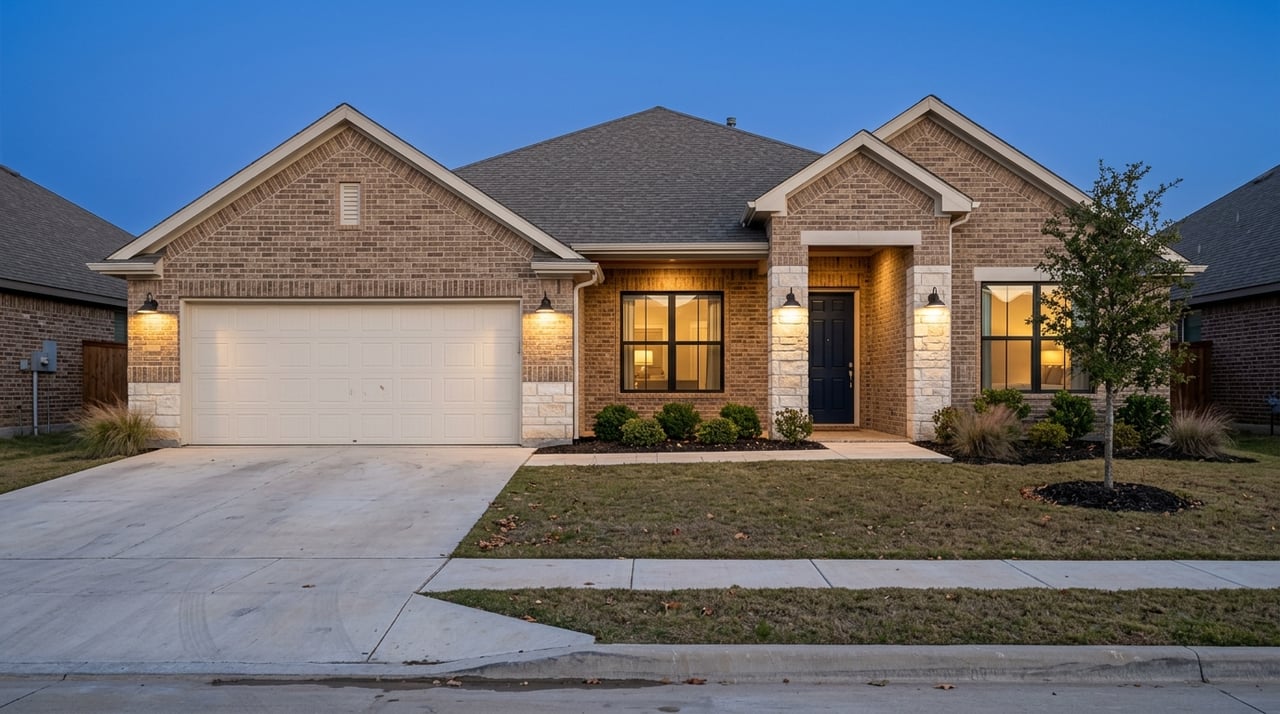
Trying to buy and sell a home at the same time in Justin can feel like a juggling act. You are balancing timing, money, moving plans, and the risk of one deal changing before the other is finished. The good news is that with the right strategy, you can reduce surprises and make smarter decisions. Let’s walk through how this works in Justin and what you should plan for before you make your move.
Why timing matters in Justin
Justin is growing quickly, but it is not always a lightning-fast market. According to U.S. Census QuickFacts for Justin, the city’s 2024 population estimate was 6,197, up 41% from 2020, and 83.7% of occupied homes were owner-occupied. The same source reports a median owner-occupied home value of $406,800, which helps explain why many homeowners need to use equity from their current home to buy the next one.
Location is part of Justin’s appeal too. The city notes that Justin is about 17 miles from Denton, 25 miles from downtown Fort Worth, and 23 miles from DFW Airport, which can make it attractive for buyers who want access to major job and travel corridors. At the same time, Justin is balancing historic planning with new growth through efforts like the Old Town Master Plan.
That mix of older homes, resale inventory, and new construction can make timing more complicated. A market snapshot cited by Realtor.com’s Justin market page described Justin as a buyer’s market, with homes taking a median of 74 days on market and selling near 99% of list price. That means your current home may not sell overnight, so your plan should leave room for overlap.
Buy first or sell first?
This is usually the first big question, and the answer depends on your finances, your risk tolerance, and how much flexibility you have.
If most of your down payment is tied up in your current home, selling first is often the safer path. It can free up equity, make your financing clearer, and lower the chance that you are carrying two housing payments at once. It can also make it easier to know your true budget before you shop.
Buying first can make sense if you have enough cash reserves or financing options to carry both homes for a period of time. This may be helpful if you find a home you do not want to lose or if your move needs to match work, relocation, or family timing. Still, buying first usually adds more financial pressure.
In Justin, this choice matters even more because resale timing and new-construction timing do not always line up neatly. If your next home is in a growing area or a developing community, the build timeline may shift while your current home sale is moving on a different schedule.
When a sale contingency helps
One of the most protective ways to buy while selling is to make your purchase dependent on the sale of your current home. In Texas, the TREC Addendum for Sale of Other Property by Buyer is used when you cannot buy the next home unless your existing home sells and closes.
This kind of contingency can protect you from being forced to close on the new property before your current home is sold. For many homeowners, that protection is worth a lot. It can reduce the chance of draining savings, taking on extra debt, or scrambling if your current home stays on the market longer than expected.
The tradeoff is that a contingency can make your offer less appealing to a seller. If the seller has another buyer who does not need to sell first, they may view that offer as less risky. In a slower market, sellers may be more open to contingencies, but you should still expect that protection to affect how competitive your offer feels.
When a contingency may weaken your offer
A contingency tends to be weakest when the seller needs certainty and speed. If the home is newly listed, priced well, or attracting multiple offers, a seller may not want to wait for your home sale timeline.
That does not mean you should waive protections you truly need. It means your strategy should fit your situation. If you need your current home to sell before you can safely close, a realistic plan is better than stretching too far just to compete.
The Consumer Financial Protection Bureau also recommends protecting yourself with financing and inspection contingencies so you are not forced to close if the loan falls through or a serious issue is found during inspection. These protections matter because a purchase can look well-timed on paper and still get delayed by lending, repair negotiations, or appraisal issues.
What if the seller accepts another offer?
This is one of the hardest parts of buying while selling. You may find the right home, write an offer, and then wait while your current home is still under contract or still on the market. During that time, another buyer may come along.
One option in Texas is a back-up contract. The TREC Addendum for Back-Up Contract allows a second contract to become effective if the first contract terminates. This can be useful when you want to stay in the running without taking on full risk while another buyer is in first position.
A back-up contract does not guarantee that you will get the home, but it can keep the door open. In the right situation, it gives you a path forward while you continue working through your sale.
How inspection and appraisal issues affect timing
Even when both transactions seem lined up, inspections and appraisals can change the schedule.
On the home you are buying, an inspection may reveal repairs, safety issues, or major systems concerns that lead to more negotiation. If the seller agrees to repairs, that can extend the timeline. If the problems are significant, you may decide not to move forward.
An appraisal can also create delays if the value comes in below the contract price. That may require a price change, a larger cash contribution, or another round of negotiation with the seller and lender. If you are counting on both closings to happen back-to-back, even a short delay can affect movers, temporary housing, and loan coordination.
On the sale side, your own buyer may run into inspection objections or financing delays too. That is why it helps to think of the two transactions as connected but not perfectly synchronized.
Closing both deals smoothly
When you buy and sell around the same time, closing logistics matter just as much as price and terms. The CFPB notes that the loan closing and home purchase closing typically happen at the same time and may involve the title company, escrow, and attorneys. In practice, careful scheduling is what helps your proceeds from one transaction flow into the next.
Many homeowners aim to close the sale of their current home shortly before or on the same day as the purchase of the next home. That can work well, but it does leave little room for delay. If one closing shifts, the other may need to shift too.
This is where clear communication becomes critical. You want all parties to understand deadlines, funding timelines, possession dates, and what happens if one side needs a short extension.
Using a leaseback in Texas
If you sell first but need a little more time before moving, a leaseback may help. In Texas, the TREC Seller’s Temporary Residential Lease is used when the seller stays in the home for up to 90 days after closing.
This can create a short bridge between transactions. For example, you might close on your current home, receive your proceeds, and then remain in the property briefly while your next home closes or your move-in date arrives.
A leaseback can be especially helpful when you are waiting on final details for a new home or trying to avoid a rushed move. It is usually best for short gaps, not long-term housing plans.
Financing options if equity is tied up
If you want to buy before your current home sells, you may need another way to access funds. Two options people often explore are bridge loans and HELOCs, but both come with risk.
Fannie Mae says a bridge or swing loan is acceptable only if it is not cross-collateralized against the new property and the lender documents that you can carry the new home, the current home, the bridge loan, and your other obligations. In plain language, the lender needs to see that you can handle the full financial load.
The CFPB explains that a HELOC is a second mortgage secured by your home, and failure to repay can put that home at risk. That does not make these tools wrong, but it does mean they should be weighed carefully. If any third-party lender is financing part of the purchase price, Texas uses the standard Third Party Financing Addendum in the contract process.
New construction adds another layer
Justin’s growth means some buyers are not just buying another resale home. They are selling one home while buying into a developing community.
If your next home is under construction, timing becomes less predictable. The CFPB notes that builders may ask for an upfront builder deposit or earnest money, and you should ask when that deposit can be returned. The agency also notes that you do not have to use the builder’s affiliated mortgage lender.
Texas uses the TREC New Home Contract for incomplete construction rather than the standard resale contract for builder sales. That matters because builder timelines, lot delivery, road work, and final completion are all separate moving parts.
In Justin, this is especially relevant in active growth areas like Timberbrook, a master-planned community referenced by the city as part of Justin’s broader development pattern. New-home buyers should expect construction timelines to shift and should build flexibility into the sale of their current home whenever possible.
School timing in Justin
For many households, move timing is not just about the house. It is also about enrollment timing and address-based school assignment.
Justin addresses are in Northwest ISD, and the district says school assignment depends on the exact home location. NISD provides a school-zone locator and boundary maps, and it also notes that some campuses may be closed to transfers based on enrollment.
NISD states that it is the fastest-growing school district in North Texas and typically opens at least one school each year, revising attendance zones as needed. The district has also shared that a replacement Justin Elementary in Timberbrook is opening for the 2025-2026 school year, increasing capacity from 650 to 850 students and relocating the campus as part of its growth response.
If you are buying while selling, that means it is wise to verify school assignment twice: once when you make the offer and again before closing if the completion date or closing date changes. That extra check can be especially helpful when a home is under construction or when district boundaries are being updated.
A practical plan for buying and selling together
The smoothest moves usually start with a plan before either home hits the market.
Here is a simple framework:
- Understand your equity and budget. Know how much of your next purchase depends on selling your current home.
- Decide your risk level. Choose whether selling first, buying first, or using a contingency best fits your comfort level.
- Prepare your current home early. The better your home is positioned for the market, the easier it is to support your next purchase.
- Match the contract to the situation. A sale contingency, back-up contract, leaseback, or financing addendum can help depending on your needs.
- Expect timing to move. Inspections, appraisals, loan approval, and builder schedules can all affect your calendar.
- Double-check local details. In Justin, that includes construction timing, possession dates, and school boundary updates.
Buying and selling at the same time in Justin is possible, but it works best when you have a strategy built around real timelines, not wishful thinking. If you want help mapping out the smartest order of operations for your move, connect with Edson Miranda for local guidance, buyer and seller support, and a clear plan tailored to your next step.
FAQs
Should I sell my Justin home before buying another one?
- If you need the equity from your current home for your down payment or want to avoid carrying two housing payments, selling first is often the safer option.
How does a home sale contingency work in Texas?
- In Texas, the TREC Addendum for Sale of Other Property by Buyer can make your purchase dependent on your current home selling and closing first.
What happens if a Justin seller accepts another offer while I wait?
- You may be able to use a Texas back-up contract, which keeps you in position if the first contract falls through.
Can inspection or appraisal issues delay buying and selling at the same time?
- Yes. Inspection negotiations, repair requests, low appraisals, and lender timing can all delay one or both closings.
How can a leaseback help when selling a home in Justin?
- A leaseback can let you stay in your sold home for up to 90 days after closing, which may give you a short bridge before moving into your next home.
Why should Justin buyers check school boundaries before closing?
- Northwest ISD assigns schools by address, and because attendance zones can change during periods of growth, it is smart to verify assignment again before closing.
