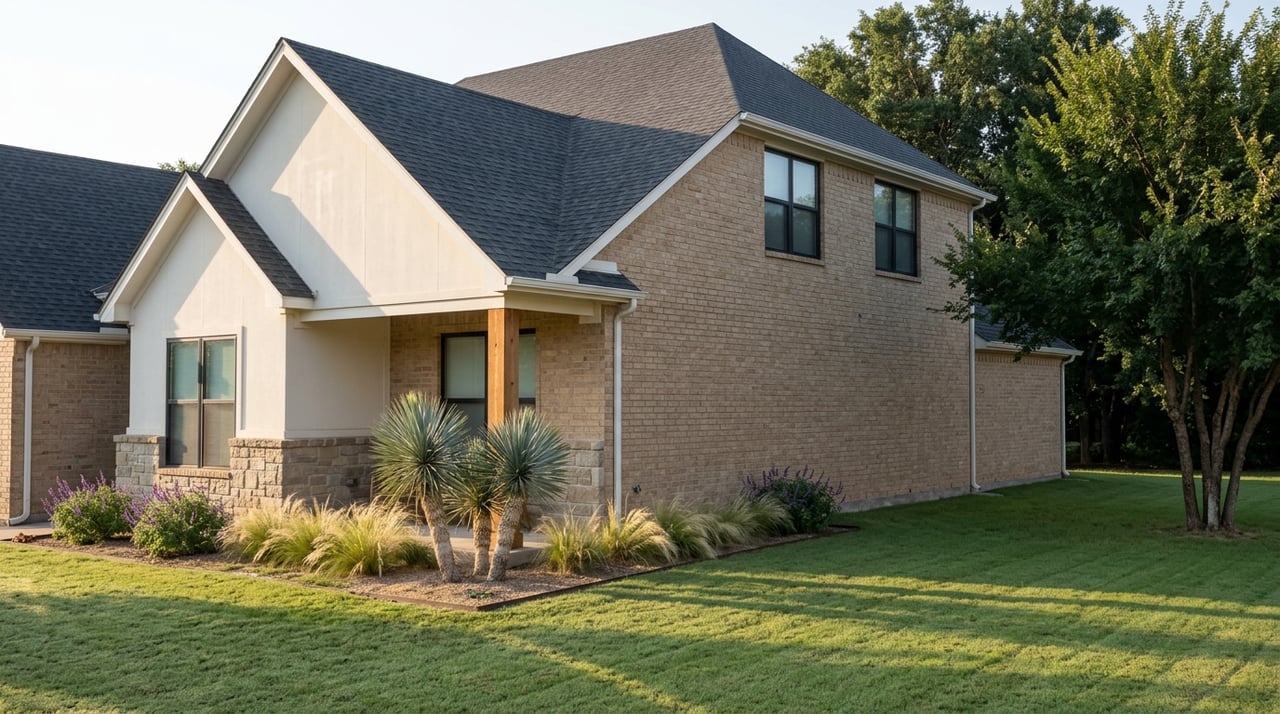
Two houses go under contract in Argyle the same week. Both list near $700,000. Both sit inside Argyle ISD boundaries. The first buyer books a standard inspection, gets the report back the next day, and closes on schedule. The second buyer books the same kind of inspection, then learns three weeks later that nobody looked at the thing that actually determines whether the house works: an aerobic septic control panel bolted to the side of the garage, quietly running on a maintenance contract nobody transferred.
Same price bracket. Same city. Two properties that need entirely different questions answered before an offer ever goes in.
That split is the thing most buyers moving to Argyle don't know to ask about, and most sellers don't realize they need to disclose correctly. It has nothing to do with the school district or the builder's reputation. It comes down to what's underneath the lot: whether the home sits on a private well and septic system, or on city sewer and community water inside a master-planned neighborhood. Those two versions of Argyle require two different inspection sequences, two different disclosure paths, and two different closing timelines. Treating them as one market is how buyers skip the inspection that actually matters.
The line no map draws for you
Old Town Argyle and the acreage tracts around it still run largely on private infrastructure. A meaningful share of homes outside the master-planned communities depend on private wells, aerobic septic systems, or both, and those systems fall under Texas Commission on Environmental Quality rules that require periodic licensed inspection and an active maintenance contract on file. Argyle Water Supply Corporation serves most of the area, though on the largest tracts, generally 15 acres or more, a private well can still make more sense for irrigation or livestock than tying into the utility.
Half a mile away, inside Harvest or Canyon Falls, none of that applies. Those homes tie into city sewer and community water from day one. Harvest by Hillwood alone is a 1,200-acre master-planned community straddling Argyle and Northlake, built out by production builders including David Weekley Homes, Highland Homes, Plantation Homes, D.R. Horton, and Horizon Homes, with more than 4,000 homes planned at full build-out. There's no septic system to worry about, no well to test. The risk here isn't buried infrastructure. It's speed.
Country Lakes and Argyle Town Village sit somewhere in between, close enough to schools and retail to feel suburban, but still worth checking parcel by parcel for how the home is actually served. In Argyle, the address on the listing doesn't tell you which version of the town you're buying into. The utility connection does.
What Texas actually requires when a septic system changes hands
Here's the part that catches people off guard on the well-and-septic side. Buyers often assume a septic system gets the same kind of mandatory, state-regulated inspection at closing that a termite report or a foundation survey gets. It doesn't. As TCEQ states plainly on its own homeowner guidance page, referring to septic evaluations at time of sale: "This type of evaluation is not required or regulated by TCEQ."
What Texas does require is disclosure, not inspection. According to Septic Roster, a seller has to disclose the existence and known condition of an on-site sewage facility as part of the standard Seller's Disclosure Notice, with a supplemental septic form attached. That's a paperwork obligation, resting on what the seller knows and states. Whether an independent evaluator ever puts eyes on the tank, the aerator, and the drain field before the buyer signs is a separate question, and it's one that gets answered by the buyer's lender, not by the state. Some lenders will require an OSSF evaluation before funding. Others won't ask at all.
For aerobic systems specifically, the ongoing obligation doesn't end at closing. State law requires a maintenance contract with a licensed provider and inspections roughly every four months for as long as the system operates. That's not a one-time closing cost. It's a recurring line item a buyer inherits along with the house, and it's worth confirming during option period whether the current contract is active and transferable, or whether the new owner will need to set one up from scratch.
There's a wrinkle that surprises a lot of acreage buyers. Some of the larger parcels around Argyle, ten acres or more, can qualify for an exemption from the standard county septic permitting process, provided a licensed site evaluator confirms the system sits at least 100 feet from every property line and isn't causing a nuisance or polluting groundwater. It's a real exemption, but it's not automatic, and confirming whether a specific parcel actually qualifies is exactly the kind of detail worth running down before, not after, the option period closes.
Half a mile away, the risk moves from paperwork to timing
Inside Harvest and Canyon Falls, the inspection conversation looks completely different, because the property isn't hiding fifteen years of septic history. It's brand new, and the risk sits in how fast it got built.
Production builders move on tight schedules. That's part of what makes new construction in a community like Harvest attractive: predictable pricing, warranties, move-in dates you can plan around. It also means small installation details can get missed in the rush, which is exactly why phase inspections exist, as Guardian DFW describes. A pre-pour inspection catches foundation problems before concrete gets poured over them. A pre-drywall inspection catches framing, wiring, and plumbing rough-ins before they disappear behind sheetrock. An 11-month warranty inspection catches anything that surfaced in year one.
The detail buyers miss most often here isn't a construction defect. It's who the inspector works for. When a builder sends their own representative through a home before closing, that person reports to the builder, not to the buyer. An independent, TREC-licensed inspection is the only version of that walkthrough where the person doing the looking is actually working for you.
Denton County's expansive clay soil adds one more layer that applies just as much to a two-year-old Harvest home as to a forty-year-old rural one. Clay soil expands and contracts with moisture, which is why a foundation elevation survey, a baseline measurement of how level the slab actually is, is worth having on record early. It gives you something to compare against if you ever notice a door sticking or a hairline crack widening five years down the road.
| Old Town & Acreage Argyle | Harvest & Canyon Falls | |
|---|---|---|
| Water and sewer | Private well and/or aerobic septic (OSSF) | City sewer and community water |
| Inspection to prioritize | Septic evaluation and well water test | Pre-pour, pre-drywall, and 11-month warranty inspections |
| Who orders it | Buyer, often at lender's request | Buyer's independent inspector, separate from builder's rep |
| Recurring cost after closing | Maintenance contract; inspections roughly every 4 months for aerobic systems | Standard HOA dues, no septic-style contract |
| State-mandated at sale? | No. Disclosure is required; inspection is not | Not applicable |
| Where the clock gets tight | Scheduling a licensed evaluator within option period | Pre-drywall must happen before framing is covered |
What this means if you're the one buying or selling
If you're selling a home outside the master-planned communities, get ahead of the disclosure paperwork before you list. Confirm your maintenance contract is current and transferable, and have your last few inspection reports on hand. A buyer's lender asking for an OSSF evaluation mid-option-period is a common source of delayed closings, and it's avoidable if the seller already has clean records ready to hand over.
If you're buying into Harvest or Canyon Falls, don't assume "new" means "inspected." Schedule your independent pre-drywall inspection early enough that it happens before the builder's crew covers the framing, because once drywall goes up, that window is gone. And mark your calendar for month ten of ownership, not month twelve, so there's time to get a warranty inspection scheduled.
If you're buying on acreage, budget septic maintenance into your real cost of ownership the same way you'd budget property taxes.
A few questions worth asking before you write an offer anywhere in Argyle:
- Is this property on a private well and septic system, or connected to city sewer and water?
- If it's on septic, is the current maintenance contract active, and will it transfer to me?
- If it's new construction, has an independent inspector, not the builder's own rep, walked the home at each phase?
- Has a foundation elevation survey ever been done on this lot, and is there a baseline reading on file?
FAQ
Does Texas require a septic inspection before a home can be sold? No. The state requires the seller to disclose the existence and known condition of the system.
How often does an aerobic septic system need to be inspected once I own it? State law requires a maintenance contract with a licensed provider and inspections roughly every four months for as long as the system is in use. It's an ongoing obligation, not a one-time closing task.
Is a builder's own walkthrough inspection the same as an independent inspection? No. A builder-provided inspector works for the builder. An independent, TREC-licensed inspector works for you, which matters most during the pre-drywall phase, before anything gets covered up.
Whether you're weighing a rural acreage tract on the edge of Old Town Argyle or a new build going up inside Harvest, the questions that protect you are different depending on which Argyle you're actually buying into. Miranda Realty Team has walked both versions of this town with buyers and sellers who didn't know which questions to ask until someone local pointed them in the right direction. If you're getting ready to make a move, Get Your Free Home Valuation and let's talk through exactly what your property, or the one you're eyeing, actually requires.
This article is general information, not legal, tax or financial advice. Consult a qualified professional about your situation.
